

Article Summary: Many people in the prison system are misunderstood. Yes, most of them knowingly committed a crime, but many have struggled with mental health issues their entire lives. If those issues had been properly addressed, they likely never would have committed those crimes. That’s why therapy for ex-prisoners (and current prisoners) is so important: If we can heal the internal wounds, we can help people lead happier, more peaceful lives.
The US is frequently criticized for having the largest prison population in the world, and that criticism is warranted.
Nearly 2 million people are currently spread across roughly 3,200 prisons—meaning nearly 6 out of every 1,000 Americans are stuck behind bars.
Many of them don’t deserve to be there. And many more are currently being mistreated.
And one thing is certain: Few prisoners receive the therapy and resources necessary to become rehabilitated.
As a result, the country’s recidivism rate—the percentage of former inmates who go back to prison—is a staggering 39%.
That’s one of the reasons I started the MAYA Organization so many years ago: to offer support to marginalized birthing people, including those in prison.
But it’s not just incarcerated pregnant women who need support. All inmates and ex-convicts could benefit from compassionate therapy.
Table of Contents
What Is Therapy Like For Former Inmates?
Trauma In Prison Populations
About 40% of inmates have a history of mental illness before going to prison. Sadly, 63% of these individuals do not receive mental health support while they’re incarcerated—despite growing legal and societal pressure to do so.
That means the prison system quickly becomes a breeding ground for additional mental health issues, especially when you consider:
1. Safety Is Always An Issue
Prisons are supposed to be secure spaces, but that’s rarely the case. Prisons constantly face:
- Threats from other inmates.
- Threats from guards, including guards with their own ego issues stemming from internal insecurities.
- Threats from bureaucracy, especially legal issues that could keep them in prison longer.
While data on prison violence is difficult to come by, we do know that approximately 2% of all emergency hospital visits stem from injuries sustained during incarceration.
2. Inmates Aren’t Treated As People
Prison is inherently dehumanizing. As an example, I remember visiting the women’s prison in Pittsburgh and greeting the guard.
“Hi, I’m here to meet with the ladies.”
The guard’s response was sharp and immediate: “We don’t have ladies. We have inmates.”
Consider that for a moment:
Research shows that many incarcerated individuals have a history of mental health issues, trauma, and abuse. This is a population that is already struggling with identity and self-respect, and now the entire system is working to strip away any remaining sense of dignity and humanity.
Many people in prison have faced various types of trauma throughout their lives, and this is simply a continuation of that past.
Even when prison isn’t violent, the rules and procedures are put in place to strip away individuality:
- You have no choice in your schedule. You sleep when you’re told to sleep. You eat when you’re told to eat. You go outside when you’re told to go outside.
- You have limited access to education and training, so many inmates struggle with self-improvement or preparing to find a job once they leave prison.
- You have limited access to communications outside of prison. Visits from friends and family are limited, and your lack of access to the outside world could mean you lose the rights to your own kids.
Again, prison is part of a cycle. In this instance, it’s a cycle of abuse and getting pushed down over and over and over again.
3. Prison Rarely Prepares People For Release
One of the reasons the US recidivism rate is so high is because the prisons rarely prepare people for release, and many of these individuals struggle to transition back into society—especially without falling back into their old ways.
Consider this:
- Getting out of prison is a major lifestyle adjustment. After months or even years of being told what to do and when to do it, you’re finally able to make your own decisions. Some people have trouble adjusting.
- Many people have no option but to return to their old family and friends—the same people who could have contributed to the abuse they experienced or the crimes they committed.
- Some may have lost their housing and other property while incarcerated, and they may have nowhere else to turn.
- You need time to adjust. Being removed from society means you have to relearn everything. Sometimes that means catching up with current events, technology, or job trends. For others, it simply means learning how to have a conversation without constantly looking over your shoulder.
- Finding a job is difficult. Once you’re in prison, that shows up on your record—and that could prevent you from finding work at jobs that conduct thorough background checks. And without reliable income, some are tempted back to a life of crime. One analysis found more than 27% of formerly incarcerated people are unemployed.
What Is Therapy Like For Former Inmates?
Here’s what therapy may include for former inmates:
1. Finding Ways to Meet Your Basic Needs
If you’ve been incarcerated, a skilled therapist can help you ensure your basic needs are met. That includes:
- Reliable access to housing
- Reliable access to food
- Job placement
- Access to substance abuse support, if necessary
Out of all of these, housing is often the hardest. A few reasons:
- Halfway houses are often hard to find or get into.
- More landlords run background checks, and you likely won’t pass one.
- Many landlords want a security deposit on top of the first month’s rent—and that’s especially challenging if you haven’t been employed for multiple months or years.
- If you can’t afford to live in a safe, well-maintained neighborhood, you may have to live in a neglected neighborhood where crime is more common—which could potentially lead you back to a path to prison.
While these aren’t technically a therapist’s primary focus (these objectives are better handled by a social worker), a compassionate professional will ensure you’re familiar with the best resources possible.
After all, therapy is much more impactful when you can focus on the root problems without being distracted by questions like, “How am I going to eat today?” or “Where am I going to sleep tonight?”
In some cases, we’ve seen people require six months to a year before they feel truly settled and integrated back into society.
2. Addressing the Inner Trauma
Many of the former inmates we’ve spoken to never received good therapy while in prison—if they received any therapy at all.
So, this is therapy from the ground up. We often start by asking:
- What do you need to better adjust back into society?
- How are you handling the adjustment?
- How do you want to grow?
As we mentioned earlier, many inmates have a history of trauma. For example:
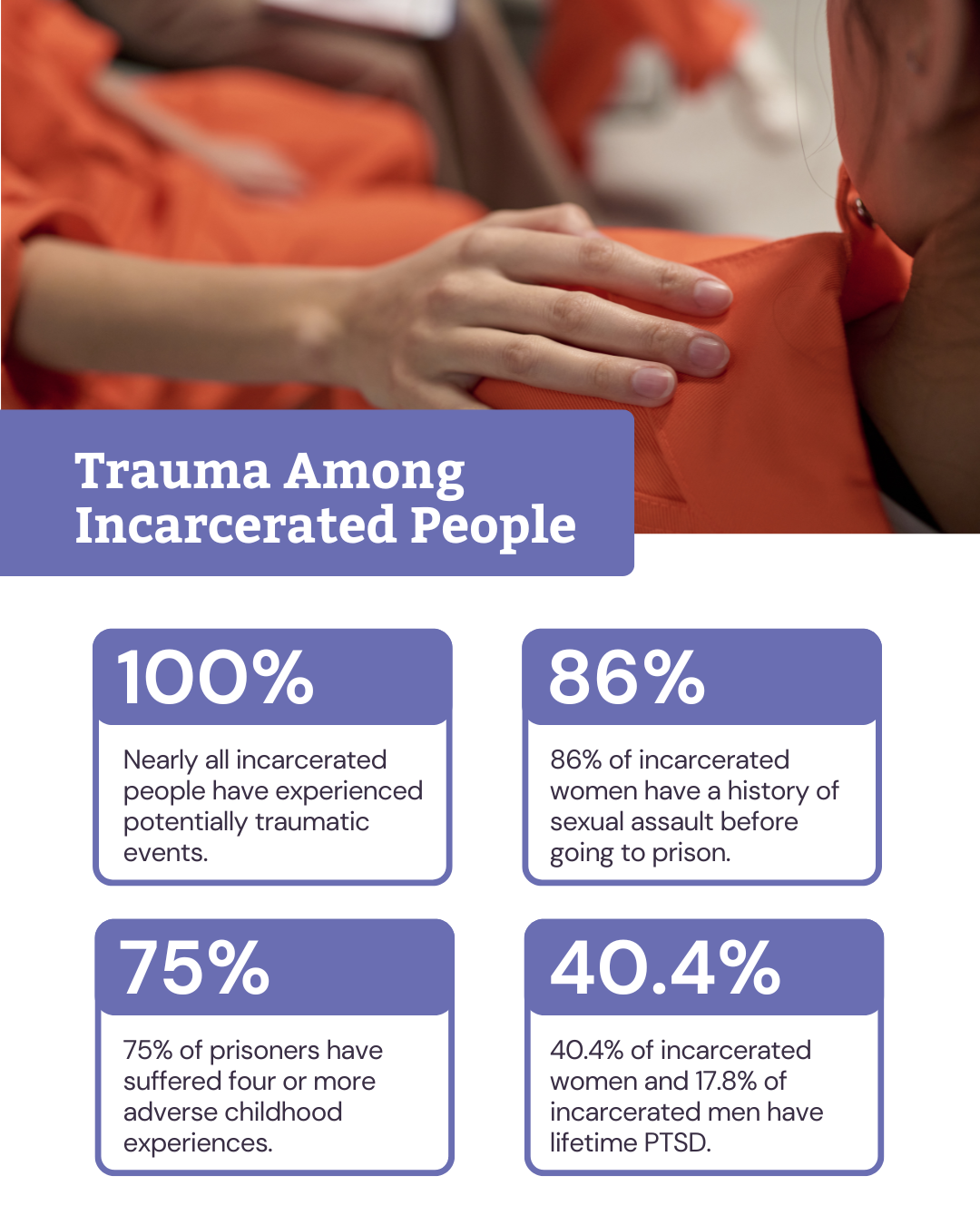
- Nearly 100% of people who are incarcerated have experienced potentially traumatic events.
- 86% of incarcerated women have a history of sexual assault
- 75% of prisoners have experienced four or more adverse childhood experiences, such as death of a loved one, abuse, or trauma.
- 40.4% of incarcerated women and 17.8% of incarcerated men have lifetime PTSD—and PTSD is linked to both rearrest and post-incarceration drug use.
And here’s anecdotal evidence: Out of the dozens (if not hundreds) of incarcerated women I’ve met, treated, and worked with, only one didn’t have any trauma.
How to Address Trauma
Here are a few strategies we use to address trauma among people who’ve been incarcerated:
1. EMDR
For many former inmates, incarceration is only one chapter in a much longer history of trauma. Long before prison, many experienced childhood abuse, neglect, domestic violence, community violence, or substance abuse within the home. Prison often compounds those wounds rather than healing them.
That’s why Eye Movement Desensitization and Reprocessing (EMDR) can be so effective.
EMDR uses bilateral stimulation to help the brain safely process traumatic memories that may have remained “stuck” for years or even decades. Rather than forcing clients to relive painful experiences, EMDR allows the brain to reorganize those memories so they no longer produce the same intense emotional or physical reactions.
For former inmates, this can be transformative. Instead of constantly operating in survival mode, clients often experience reduced anxiety, fewer flashbacks, improved emotional regulation, and a greater sense of safety. They may also begin viewing themselves differently—not simply as someone who has been abused or incarcerated, but as someone capable of growth and healing.
For many people leaving prison, processing the trauma that existed both before and during incarceration becomes one of the most important steps toward building a healthier future.
Related Reading: How Long Does EMDR Take For Complex Trauma?
2. Cognitive Behavioral Therapy (CBT)
Trauma doesn’t just affect what happens to us—it changes the way we think.
Many formerly incarcerated individuals carry deeply ingrained beliefs such as, “I’m a bad person,” “I’ll never succeed,” “Nobody will ever trust me,” or “I’m always going to end up back in prison.”
Whether these beliefs developed through childhood trauma, years of incarceration, or repeated rejection after release, they can become major obstacles to rebuilding a meaningful life.
Cognitive Behavioral Therapy (CBT) helps challenge those beliefs.
Working alongside a therapist, clients learn to recognize unhealthy thought patterns, identify behaviors that reinforce them, and replace them with healthier, more realistic perspectives. CBT also teaches practical coping skills for managing stress, anger, anxiety, and everyday challenges without falling back into destructive habits.
For many former inmates, CBT is especially valuable during reentry into society. Job interviews, housing applications, rebuilding relationships, and navigating daily responsibilities can all trigger feelings of failure or hopelessness. CBT provides practical tools for responding to those situations thoughtfully rather than impulsively.
Over time, clients often develop greater confidence, improved decision-making skills, and a stronger belief that their future doesn’t have to be defined by their past.
3. Person-Centered Therapy
Many formerly incarcerated individuals have spent years living in environments where they weren’t treated as whole people.
Whether the trauma came before prison, during incarceration, or both, they often leave with a damaged sense of identity and self-worth. Years of being viewed as an inmate, a criminal, or simply a number can make it difficult to believe they’re deserving of compassion, respect, or a second chance.
Person-centered therapy helps restore that sense of humanity.
Rather than focusing on judgment or punishment, this approach creates a safe, accepting environment where clients can openly explore their thoughts, emotions, and experiences. The therapist listens with empathy, validates the client’s feelings, and helps them discover their own strengths and values.
This process can be especially powerful for people whose lives have been defined by shame. Instead of viewing themselves solely through the lens of their mistakes, clients begin recognizing that they are far more than the worst thing they’ve ever done.
As trust develops, many former inmates become more willing to process painful experiences, build healthier relationships, pursue meaningful goals, and develop a new identity centered on growth rather than survival. That shift in self-perception often becomes the foundation for lasting healing and successful reintegration into society.
Find Therapy For Ex-Prisoners
If you’ve been incarcerated and are looking for help, we’re here to support you.
Contact us. Our compassionate therapists are ready to give you the help you need.