
Article Summary: Therapy for adoption trauma is essential, as research shows that many adoptees suffer from complex trauma and CPTSD—often a result of abandonment, neglect, and even abuse. Fortunately, EMDR and other therapies can help adoptees heal from these wounds and lead happy, healthy lives.
As you think back to your childhood, you probably don’t remember very many moments before you turned two or three.
But those early years were foundational in shaping who you are today.
That’s especially true if you’re adopted. Regardless of whether you were adopted as a baby, child, or teenager, there’s a good chance you’re carrying the emotional weight of trauma.
But therapy for adoption trauma can help. Continue reading to learn more:
Table of Contents
Why Do Adoptees Experience Adoption Trauma?
Why Is Therapy for Adoption Trauma So Important?
Book Therapy for Adoption Trauma’
FAQ
Why Do Adoptees Experience Adoption Trauma?
Adoption is a complex ordeal, and it can spell lifelong challenges for adoptees. Some of the major causes for deep-rooted trauma include:
1. Gestation Decisions & Factors
What happens in the womb matters.
When a pregnant mother is happy, those happy hormones flood the baby as well. Plus, she’s more likely to make healthy decisions, such as:
- Eating nutritious meals
- Getting regular exercise
- Getting plenty of sleep
She can even bond with the baby by singing songs, engaging in baby yoga, and simply talking.
All of these decisions have healthy, compounding effects on the growing baby.
But what happens if a mother doesn’t want the baby—or knows she’s going to offer it up for adoption?
In these cases:
- The baby could be flooded with stress hormones.
- The mother might turn to substance abuse, which could hurt the growing baby.
- The mother might not take care of herself, which could also hurt the baby.
As therapists, we’ve seen the worst of what can happen. I remember one pregnant client, years ago, who was addicted to drugs. At the time, she confessed to wanting to sell her baby to her dealer for $5,000.
As Associate Therapist Allie Greene says, “[Being in the womb] is the first relationship we have. We hear our mother’s voice, her body, and her heartbeat. When we’re suddenly separated from that, we lose a nine-month relationship and are sometimes passed from incubator to stranger to cradle to new strangers… In that confusing state, our only thought is often, ‘I am going to die.’”
2. Early Neglect
Regardless of whether a baby is born healthy, thrust into the NICU, or passed between foster homes, those early days can have a monumental impact on their long-term health.
Research shows that babies who are constantly passed from caregiver to caregiver—such as with nurses in the hospital or inside the foster care system—often miss the opportunity to form a healthy attachment relationship with anyone, which can lead to long-term relationship issues.
This problem becomes even more magnified in instances of abuse or neglect, which can make these long-term issues even more challenging to overcome.
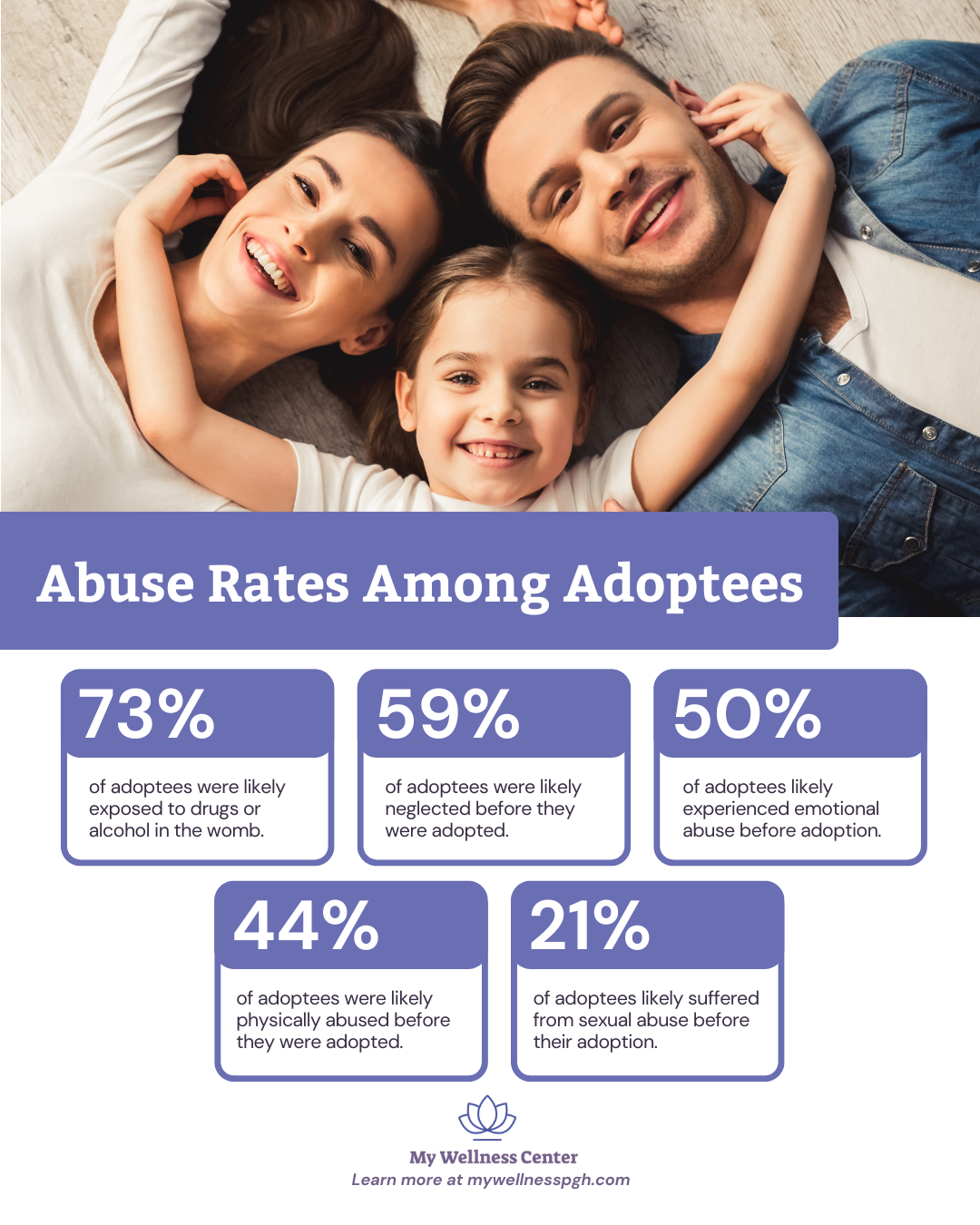
Sadly, abuse and neglect are common in the foster care system, with some pre-adoption estimates showing:
- 73% of adoptees were likely exposed to drugs or alcohol in the womb
- 59% were likely neglected
- 50% likely experienced emotional abuse
- 44% were probably physically abused
- 21% were likely sexually abused
To see all of this in action, picture this:
And it’s not just the neglect and abuse that’s damaging; it’s the instability. Imagine a baby who is born and immediately given up for adoption. They’re placed in a temporary foster home for the first few weeks, then placed in a long-term home until they’re placed for full adoption at six months old.
In those six months, the baby has already lost three different mothers, and they’ve learned something important: Caretakers disappear.
That is an unsettling realization for a helpless newborn, and it’s a deep emotional wound that can hamper the ability to develop deeper relationships later in life.
Why Is Therapy for Adoption Trauma So Important?
Therapy is critical for healing—and once again allowing joy and happiness into your life. Here are some of the biggest reasons to consider therapy for adoption trauma:
1. You Could Be Experiencing Symptoms—Even Without Realizing It
As we explain in 6 Signs of Adoption Trauma In Adults, many adoptees experience a wide range of symptoms, including:
- Trouble Forming or Maintaining Relationships
- Unexplained Feelings of Anger, Frustration, or Sadness
- Depression And Anxiety
- Substance Abuse
- Constantly Chasing Perfection
- Reactive Attachment Disorder
Compared to their peers, adult adoptees have higher rates of depression, anxiety, and behavioral disorders, as well as higher rates of mood and anxiety disorders.
There are others as well. One major study in the 1980s identified seven common, lifelong issues for adoptees, including:
- Loss
- Rejection
- Guilt & Shame
- Grief
- Identity
- Intimacy
- Mastery & Controll
2. Overcoming Family Dynamics
Research shows that many adoptees internalize adoption-related conflicts, and these can cause them to struggle with family dynamics and even their own sense of identity.
That same research also shows that therapy for family dynamics can be especially impactful (as we’ll discuss momentarily) when the therapist has some level of specialization in adoption and if the therapist places an emphasis on the adoption in therapy.
3. Therapy Works
Therapy can have a profound impact on those who have experienced complex trauma at any point in life, especially adoptees.
This is true even when a child is adopted into a happy, supportive family; the early wounds don’t disappear just because the trauma has stopped.
For adoptees with complex trauma, we often find EMDR is incredibly beneficial—and the research backs it up. According to Texas Tech University Health Sciences Center, symptoms were reduced or eliminated in 77% of multiple-trauma victims after only six 50-minute EMDR sessions.
Related Reading: How Long Does EMDR Take For Complex Trauma?
Book Therapy for Adoption Trauma
If you’re seeking therapy as an adoptee, contact us. Our team of compassionate therapists is ready to help you navigate your past for a healthier, happier future.
Many of our therapists are experienced in complex trauma and adoption, making them ideal resources for overcoming the pain in your past.
FAQ
What is adoption trauma?
Adoption trauma refers to the emotional, psychological, and physiological impact of separation from a biological parent or primary caregiver. Even when an adoption leads to a loving, supportive home, the loss of that early attachment can leave lasting effects.
Can a baby experience trauma before birth?
Research suggests that experiences during pregnancy can influence a baby’s development. Factors such as maternal stress, substance use, malnutrition, homelessness, or other significant hardships may affect a child’s nervous system before birth.
Can adoption trauma affect adults?
Absolutely. Many adoptees continue to experience adoption-related challenges into adulthood, including anxiety, depression, relationship difficulties, identity questions, fear of abandonment, perfectionism, and feelings of loss or grief.
What are common signs of adoption trauma in adults?
Some common signs include difficulty trusting others, trouble maintaining relationships, unexplained sadness or anger, anxiety, depression, substance abuse, people-pleasing behaviors, and a persistent fear of rejection or abandonment.
Why do some adoptees struggle even if they were adopted into loving families?
A supportive adoptive family can provide tremendous healing, but it cannot erase earlier experiences. The loss of a biological parent, disruptions in attachment, time spent in foster care, neglect, or prenatal stress may still leave emotional wounds that need to be processed later in life.