
Article Summary: Exposure therapy is a powerful treatment method for obsessive-compulsive disorder (OCD), and it relies on patients sitting through the discomfort of their disorder for longer and longer periods under the guidance of a qualified therapist. For this article, we interviewed Associate Therapist Kihei Comerci, LSW, to gain her thoughtful perspective on how exposure therapy has benefited her own clients at My Wellness Center.
Unless you’ve actually experienced OCD or know someone who has it, most of your knowledge of this debilitating affliction likely comes from pop culture.
But shows like Monk and movies like As Good As It Gets are often criticized for their watered-down misinterpretations of what this mental health issue is really like.
And that’s not good. These poor portrayals cause the population to misunderstand both the symptoms and the ideal treatment methods.
Because OCD isn’t chronic handwashing or verbal tics. It’s a heartbreaking disorder. And, oftentimes, the only way to overcome it is through exposure therapy—sometimes called Exposure and Response Prevention (ERP).
To help explain this in more detail, we sat down with Associate Therapist Kihei Comerci, LSW, to learn more about what makes exposure therapy for OCD so effective.
Table of Contents
What Is OCD?
What Is Exposure Therapy for OCD?
5 Benefits of Exposure Therapy for OCD
Schedule Exposure Therapy for OCD
FAQ About Therapy for OCD
What Is OCD?
Everyone thinks they know what OCD is from movies and TV shows, but reality is often quite different.
Here’s how we summarize Obsessive Compulsive Disorder: OCD is a chronic mental health condition that includes uncontrollable, recurring thoughts and compulsive behaviors.
Left untreated, OCD becomes destructive, as it often leads to:
- Severe anxiety
- Time-consuming rituals or behaviors
- Disruptions to daily life
- Destruction of relationships and occupations
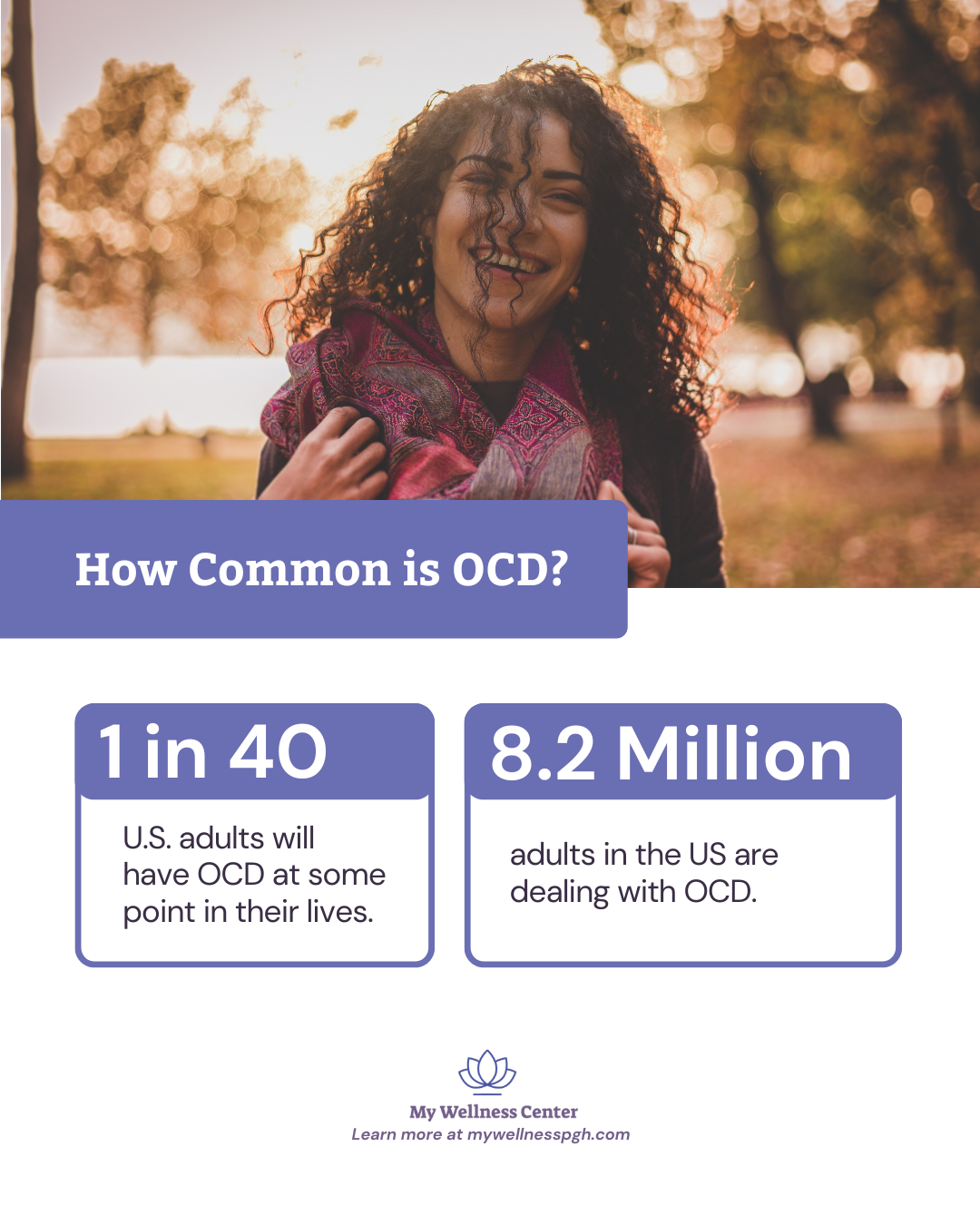
OCD is surprisingly common, impacting about 1 in 40 adults at some point in their lives, according to the International OCD Foundation. In other words: About 8.2 million adults in the US are dealing with OCD, though symptoms often start in childhood or adolescence.
What Does OCD Look Like?
Most of us are familiar with the pop culture examples of OCD, like pulling at your hair, repeatedly checking the hair straightener, or flicking the light switch a specific number of times.
But Kihei says many patients are completely unique in their compulsion. “Some of the less common ones I’ve seen include:
- A child who had to touch his own hair every time he saw a bald person.
- A client who couldn’t stop counting on an even number, and he had to recruit his mother to count his reps at the gym.
- A young man who had to say a prayer every time he saw ranch (the condiment).”
But the most prevalent and important factor of OCD is its inherently destructive nature. Between the obsessive thoughts and compulsive behaviors, OCD can become all-consuming, and, sadly, individuals with OCD often have higher rates of suicidal ideation and suicide attempts.
Where Does OCD Come From?
Sadly, many cases of OCD are actually some sort of trauma response—often stemming from an experience early on in life. As Kihei puts it: “In more than half of the OCD-related clients I see, they had some sort of childhood trauma.”
At its core, OCD is an attempt at regaining control. If someone grew up in a chaotic environment or experienced a traumatic event, OCD is a way to control your surroundings and maintain safety—even if it means destroying other parts of your life.
What Is Exposure Therapy for OCD?
As the name suggests, exposure therapy is the process of exposing yourself to your obsession for longer and longer periods—with the intention of resisting the compulsion—often under the guidance of a therapist.
So, if OCD revolves around turning off the stove, a therapy session might include turning off the stove and then sitting quietly for 10 minutes without checking on the stove again.
“I compare it to trying the sauces at Buffalo Wild Wings,” says Kihei. “If you’ve never had wings before, you don’t jump into the hottest sauce right away. Instead, you start with mild, then work your way up.”
This can be an anxious, overwhelming experience, but it gets easier over time. As you get better at overcoming the emotional response to delaying the compulsion, you can overcome the OCD altogether.
“Practicing exposure therapy is a little like training to failure in the gym,” Kihei says. “By consistently training with ‘progressive overload,’ you can expand the amount of time you can resist your compulsion. Eventually, you build new neural pathways that allow you to completely overcome your OCD.”
If you’re interested in trying exposure therapy, don’t try it on your own. Contact us for professional guidance and support.
5 Benefits of Exposure Therapy for OCD
Here are some of the biggest benefits of exposure therapy for OCD, especially when you consistently stick with therapy to work on your own challenges:
1. Greater Control Over Actions
One of the most immediate and powerful benefits of exposure therapy is regaining control over your own actions. OCD often feels like it’s in the driver’s seat—forcing you into rituals and behaviors you don’t want to perform but feel compelled to complete.
Exposure therapy helps reverse that dynamic. By gradually facing your fears and resisting compulsions, you begin to prove to yourself that you can tolerate discomfort without acting on it.
Over time, this reduces avoidance behaviors and gives you back a sense of autonomy. Instead of structuring your life around OCD triggers, you can start making decisions based on what you actually want—not what your anxiety demands.
2. Better Social Relationships
OCD doesn’t just impact your internal world—it can strain your relationships, too. Avoidant behaviors, rituals, and anxiety can make it difficult to fully engage with friends, family, and coworkers.
Exposure therapy helps you reduce avoidance and build confidence in social settings. As you become less reliant on compulsions, you can show up more fully and authentically in your relationships.
Many clients find that their behaviors begin to feel more “normal” again—not because they’re forcing themselves to fit in, but because they’re no longer controlled by OCD patterns that isolate them.
The result? Stronger, healthier, and more connected relationships.
3. Greater Focus—At Home, Work, And School
OCD is incredibly distracting. Obsessive thoughts can take over your mind, while compulsive behaviors can eat up hours of your day.
Exposure therapy helps quiet that noise. As you learn to sit with intrusive thoughts without reacting to them, they begin to lose their power.
This creates space for focus—whether you’re at work, in school, or simply trying to enjoy time at home. Tasks that once felt overwhelming or impossible become manageable again.
Over time, many individuals notice increased productivity, improved performance, and a renewed ability to stay present in their daily lives.
4. Better Health
OCD often goes hand-in-hand with other mental health challenges, including anxiety, panic attacks, and even symptoms related to PTSD.
By addressing the root patterns of OCD through exposure therapy, you can experience a reduction in these symptoms as well. Less anxiety means fewer panic episodes, better sleep, and an overall improvement in emotional regulation.
There are physical benefits, too. Chronic stress can take a toll on the body, so reducing that stress can lead to better overall health.
In many cases, treating OCD doesn’t just improve one area of your life—it creates a ripple effect that enhances your overall well-being.
5. Healing From Past Trauma
As Kihei mentioned earlier, many cases of OCD are connected to past trauma—often as a way to regain control in response to chaos or distress.
Exposure therapy doesn’t just target the symptoms of OCD; it can also support deeper healing. By facing fears and reducing compulsions, you begin to dismantle the patterns that were built to protect you in the past.
This creates an opportunity to process underlying trauma in a healthier, more adaptive way.
Over time, clients often find that they’re not just managing OCD—they’re growing beyond it. They develop resilience, emotional strength, and a greater sense of peace with their past.
Schedule Exposure Therapy for OCD
You don’t have to suffer through OCD. Contact us.
We have a robust team of licensed therapists—like Kihei—who can help you overcome OCD.
Reach out today. We can’t wait to meet you!
FAQ About Therapy for OCD
What is exposure therapy for OCD?
Exposure therapy is a structured, evidence-based treatment that helps individuals gradually face their fears (obsessions) while resisting the urge to perform compulsions, allowing anxiety to decrease over time.
Is exposure therapy the same as ERP?
Yes. Exposure therapy for OCD is commonly referred to as Exposure and Response Prevention (ERP), which is considered the gold standard treatment for OCD.
Does exposure therapy for OCD really work?
Yes. Research consistently shows that ERP is one of the most effective treatments for OCD, helping many individuals significantly reduce symptoms and regain control over their lives.
How long does exposure therapy take to work?
It depends on the individual, but many people begin to see improvements within a few weeks to a few months of consistent therapy, with continued progress over time.
Is exposure therapy uncomfortable?
It can be challenging at first, since it involves facing fears and sitting with anxiety, but it is done gradually and with the support of a trained therapist to ensure it feels manageable and safe.
Can I do exposure therapy on my own?
It’s not recommended. Exposure therapy should be guided by a trained professional to ensure it’s done safely, effectively, and at the right pace for your specific needs.