
Article Summary: Parents with PTSD often struggle with raising children because their underlying trauma may interfere with their ability to connect with their family. Therapy can help these parents overcome PTSD to become more engaged with their children and live happier lives.
I had a horrific start to motherhood.
When my daughter, Maya, was born, I had a 52-hour labor followed by a medically induced coma. I was in the hospital for three weeks, undergoing stomach surgeries and relearning how to walk.
It wasn’t the birth experience I’d pictured for myself.
The entire experience left me feeling broken. But after I was discharged from the hospital—after an incredibly traumatic experience—I was expected to just start caring for my infant daughter.
But the truth was, both of us needed extra care.
Although I wasn’t diagnosed at the time, I likely experienced PTSD—post-traumatic stress disorder.
Related Reading: Post-Traumatic Resilience: How to Develop Strength After Trauma
If you’re unfamiliar, PTSD is when you suffer a traumatic event and then continue to experience stress, anxiety, depression, and fear even after the event has concluded.
For parents with PTSD, life can be especially difficult. In addition to raising happy, healthy children, you’re also tasked with wrestling the unsettled emotions and physical symptoms within your own mind and body.
Table of Contents
How Common Is PTSD In Parents?
Why Is Parenting With PTSD So Difficult?
Support For Parents With PTSD
Parents With PTSD FAQ
How Common Is PTSD In Parents?
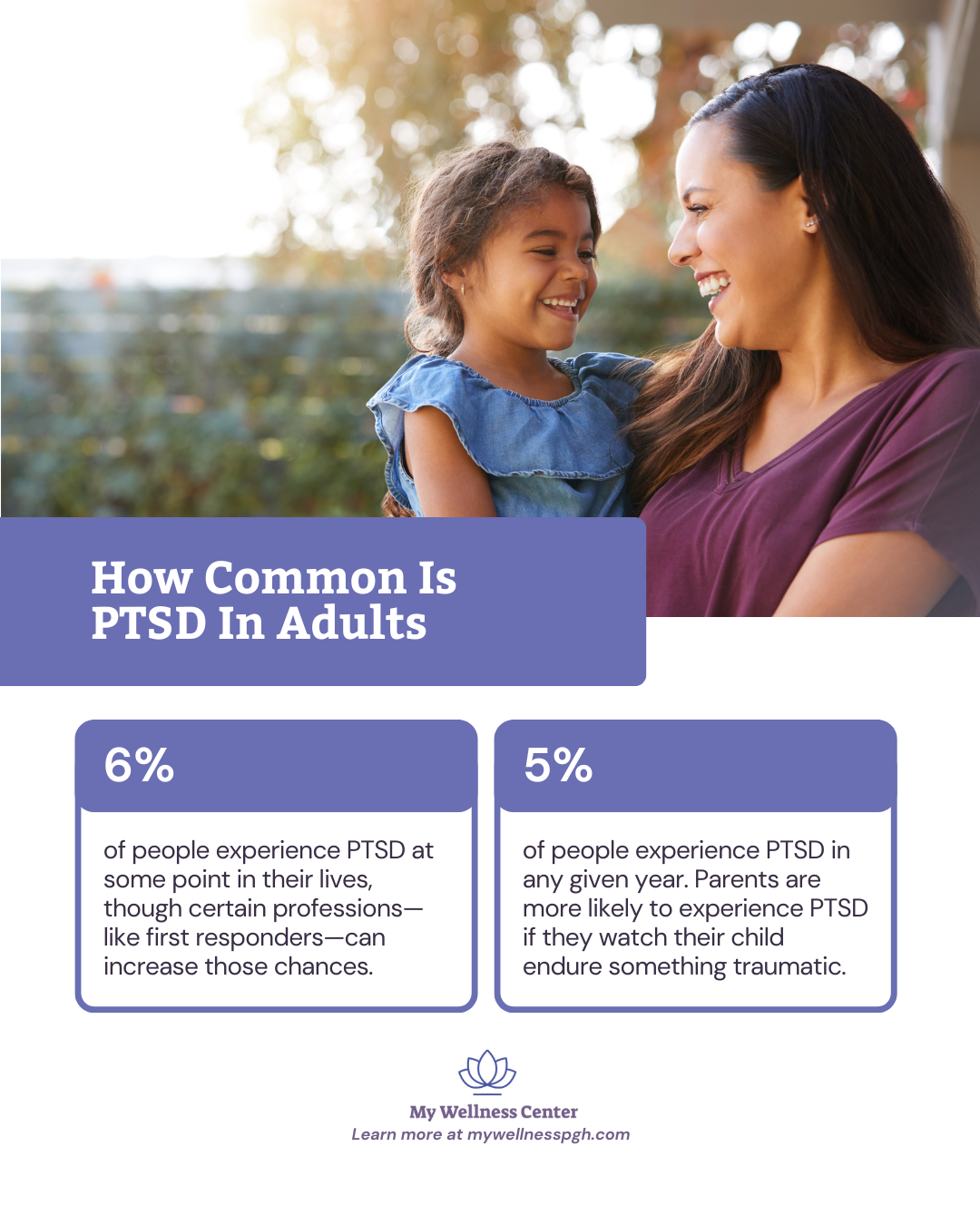
There’s little research on how many parents have PTSD, though research shows about 6% of people will experience PTSD at some point in their lives, and 5% experience it in any given year.
We also know that PTSD tends to be higher in mothers than in fathers. One study found 5.2% of females had experienced PTSD in the last year, versus 1.8% of males.
Certain professions and life events tend to increase PTSD levels, including:
- Watching your own child suffer through a major illness or another trauma (with some research showing 17% of these parents suffer from PTSD).
- Working as a first responder. One study found 57% of firefighters experience PTSD!
- Spending time in the armed forces. About 38% of military personnel report PTSD symptoms.
Of course, PTSD can also stem from a variety of other sources. Abusive relationships, childhood trauma, car accidents—any traumatic event can eventually lead to PTSD.
Why Is Parenting With PTSD So Difficult?
Parenting with PTSD is difficult simply because parenting is difficult.
Being a parent is inherently stressful. Many parents are tasked with holding down a full-time job, maintaining a clean house, looking after their own physical health, caring for pets, grocery shopping, paying bills, and the countless tasks that go along with parenting—trips to and from school, creating fun activities to play, doctor visits, and much, much more.
That’s not even mentioning the general chaos a child can create! Growing children are often unpredictable, and this can create a variety of new stressors.
And that’s bad news for parents with PTSD because PTSD often causes:
- Hyperarousal – Hyperarousal means you’re constantly on the lookout for threats. This can make you an overly protective parent who shelters your children.
- Reactivity – Being overly reactive means you’re especially shocked by sudden noises or movements, which are common when you have a house full of young children. That persistent noise can make parenting especially difficult.
- Difficulty with emotional regulation – I say this as a parent myself: Parenting is stressful. Your kids fill you with love, but they can make you unbearably angry and annoyed. PTSD can create issues with emotional regulation, making the toughest moments of parenthood even harder.
- Emotional numbing – PTSD may lead to emotional numbing, as your brain prioritizes survival over feelings. This can make bonding with your children more difficult, as you’ll have trouble experiencing the joys and laughter of parenthood.
Obviously, undergoing trauma therapy to address PTSD can provide much-needed relief and help you become a more present, loving parent.
Support For Parents With PTSD
If you’re struggling as a parent with PTSD, contact us. We’ll connect you with a compassionate member of our team who’s ready to guide you through your past trauma so you can undergo the wonderful, transformative process of healing.
To learn more, read through our blog posts on parenting and PTSD.
Parents With PTSD FAQ
What are the signs of PTSD in parents?
Common signs include hypervigilance, anxiety, emotional numbness, irritability, intrusive thoughts, sleep problems, and difficulty regulating emotions.
Can PTSD affect your relationship with your child?
Yes. PTSD can make it harder to bond emotionally, remain patient during stressful moments, or fully experience the joys of parenting.
Does having PTSD make someone a bad parent?
Absolutely not. PTSD is a mental health condition—not a reflection of someone’s love, intentions, or ability to care deeply for their child.
How does PTSD impact daily parenting?
PTSD can make everyday parenting stress feel more overwhelming by increasing emotional reactivity, anxiety, exhaustion, and sensitivity to noise or chaos.
Can therapy help parents with PTSD?
Yes. Trauma-informed therapy can help parents process past experiences, improve emotional regulation, and feel more present and connected in family life.
What types of therapy are used for PTSD?
Therapists may use approaches like EMDR therapy, trauma-focused CBT, somatic therapy, or traditional talk therapy depending on the individual’s needs.
Is it possible to heal from PTSD while raising children?
Yes. Healing is absolutely possible, and many parents find that therapy and support help them become more confident, emotionally available, and resilient over time.