

Article Summary: High performers at work, in athletics, and even in life are more likely to suffer from elevated levels of stress and burnout. We explain how to manage high performer burnout with increased self-care, scaling back workload, setting boundaries, attending therapy, and other strategies.
Last year, I launched a sister brand to My Wellness Center: My Wellness Retreats. On the surface, My Wellness Retreats is a platform for therapists to escape their hectic schedules to relax and earn CEs in incredible, exotic destinations.
But there was also a selfish reason for building My Wellness Retreats: I know what it’s like to burn out.
As a nonprofit founder, business owner, and therapist, I know what it’s like to push myself too hard for too long. At a certain point in my entrepreneurial journey, I realized I needed to take a break every few months to prioritize my physical, mental, and emotional well-being.
And I’m not alone. All over the country, high performers are burning out and looking for support. That’s why this blog is especially important to me: We’re explaining why burnout and stress is so common among high performers and how to overcome it.
Table of Contents
The Stats On High Performer Burnout
Why Do High Performers Suffer From Burnout?
Which Professions Are Burning Out?
How to Overcome High Performer Burnout
Book Therapy for High Performers
The Stats On High Performer Burnout
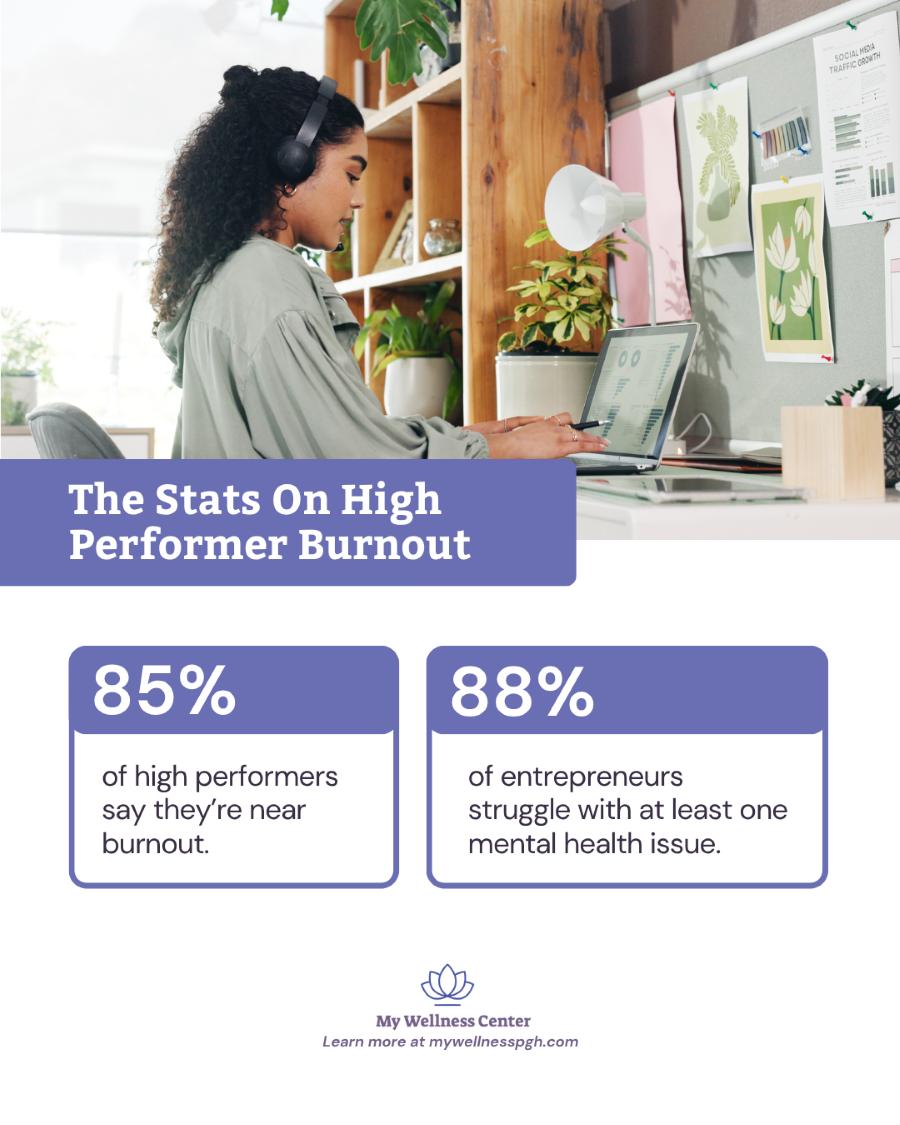
A whopping 85% of high performers say they’re near burnout, according to author and leadership expert Dr. Chris Mullen.
If you fall into that number, you’re not the only one suffering. The Harvard Business Review says high levels of burnout:
- Leads to higher error rates
- Leads to diminished productivity
- Increases absenteeism by 37%
- Increases safety incidents by 50%
In other words: If you’re burning out, both your work and your team members suffer.
And it’s all too common; a recent Gallup poll nearly reflected Dr. Mullen’s claim by showing that 76% of highly engaged team members suffer from burnout at least sometimes.
Why Do High Performers Suffer From Burnout?
High performers often suffer from burnout at a higher rate than the general population for a few different reasons, including:
1. They Set High Expectations for Themselves
These high expectations help them to achieve more than their peers, and it often elevates them into respected positions at work and within their industry.
However, those same expectations make it difficult to relax or unwind—and can even lead to additional stress or anxiety if they’re not being productive.
2. They Leave Little Time for Self-Care
As an extension of those high expectations, many high-performers neglect self-care, which can include:
- Appropriate amounts of sleep.
- Spending time with family and friends outside of work.
- Eating a healthy diet.
- Exercising regularly.
- Enjoying hobbies and self-fulfillment pursuits that are unrelated to work.
3. They Juggle Too Many Responsibilities
While this can happen in any job or role, we see this most frequently among small business owners, who often take responsibility for everything, including:
- bookkeeping, payroll, taxes, and long-term financial planning
- day-to-day marketing initiatives, including via their website and social media accounts
- client interactions and product/service fulfillment
- managing vendors and team members
Such wide responsibilities create a greater cognitive load and can even increase cortisol—the stress hormone that can improve performance in the short-term and cause physical damage in the long-term.
4. Unclear Boundaries
One reason some high-performers take on too much work is that they lack clear boundaries.
Once someone is recognized as competent in the workplace, they’re often:
- Promoted to a higher role
- Asked to handle additional responsibilities
- Tagged in by other team members to assist with small action items here and there
Eventually, these little adjustments snowball into a hectic, unbearable workload.
Which Professions Are Burning Out?
We’ve already discussed burnout among therapists, teachers, and caregivers, but those are far from the only professions suffering from burnout.
The 12 most commonly burned-out professions include:
- Food Service Workers
- Teachers
- Veterinarians and Vet Nurses
- Doctors
- Mental Health Professionals
- Nurses (especially ICU and ER nurses)
- Air Traffic Controllers
- IT Professionals and Software Developers
- Journalists
- Surgeons
- Law Enforcement Officers
- Firefighters
As we mentioned earlier, business owners are especially burned out. Some of the most stunning facts about entrepreneur mental health:
- 87.7% of entrepreneurs struggle with at least one mental health issue
- 50.2% of entrepreneurs struggle with anxiety
- 45.8% of entrepreneurs struggle with high stress
- 34.4% of entrepreneurs experience burnout
- 26.9% of entrepreneurs feel lonely or isolated
How to Overcome High Performer Burnout
Here’s a game plan you can follow to reduce stress, lower your cortisol levels, and get back to being a healthy, resilient high performer:
1. Make time for self-care
Set aside time on the calendar when you’re free from responsibilities, including work, clients, friends, and even other family members.
This could be:
- Soaking in the tub while listening to an audiobook on Friday nights
- Going out for breakfast with friends on Sunday morning
- Washing your sheets on Saturday so you can sleep in on Sunday with clean, fresh sheets
- Preparing healthy breakfasts on Sunday night so you can enjoy a nutritious meal every morning
- Hitting the gym on your drive home so you can squeeze in a workout before you unwind for the day
2. Scale back your workload.
As a high-performer, you’re probably accustomed to long, hard hours. But they’re slowly destroying your mind and body.
Scale back your workload—even if you can only do so one responsibility at a time. That could mean:
- Using a prioritization tool, like the Eisenhower Matrix, to cut out distractions and focus on long-term goals.
- Delegate extra work-related tasks to your team members or vendors.
- Hire at-home support (like a grocery delivery service or a cleaning service) to reclaim your time when you’re off the clock.
3. Set Boundaries
Setting boundaries with co-workers, employees, and family members is critical for maintaining healthy relationships and preserving your own health.
Simple first steps you can take:
- Be clear about your availability. If you’ve already left work, you don’t need to answer that non-urgent phone call about tomorrow’s meeting. And when team members know you won’t answer, they’ll learn not to call.
- Say no to unreasonable projects, responsibilities, or deadlines. As a high performer, you’re known as a problem solver—and people will naturally take their problems to you. Don’t fall into the trap of taking on too much work. Instead, turn down projects that would create too much stress in your life.
- Set times for when you’ll reply to emails, texts, and phone calls. You don’t have to be attached to your communication channels throughout the day. The average employee receives dozens of DMs and hundreds of emails every day. Setting aside chunks of time to reply during the day (some people choose a half hour in the morning and a half hour in the afternoon) can help you reclaim your time to remain productive.
4. Attend therapy
Of course, therapy can also restore peace to your life while identifying and removing the patterns that led you to burn out. That could mean:
- Learning how to manage stress
- Learning how to manage anxiety
- Learning how to develop healthy boundaries
- Learning how to advocate for yourself
- Learning how to make time for yourself and your own needs
- Learning why you feel the need to perform at a high level
- Uncovering and healing the wounds that propel you forward
Book Therapy for High Performers
If you’re feeling burned out, contact us. Our team of compassionate therapists is here to ensure you receive the resources and support you need to get back to feeling like yourself again.