

Note: This article contains references to suicide and depression, which can be triggering for some readers. If you need immediate support, please contact the suicide hotline at 9-8-8. Review our postpartum depression therapy services for long-term guidance and support.
Back in 2023, Lindsay Clancy was a well-respected labor and delivery nurse who suffered from postpartum depression and postpartum psychosis.
Her suffering eventually led her to murder her own three children before attempting suicide by jumping from a second-story window.
Now, as the case heads to trial, new articles are filled with horrific, heartbreaking stories about mental health, death, and loss
As the stories continue to come out, we’re seeing past clients (especially mothers) return to therapy because the trial and coverage are bringing up significant emotions and experiences.
Today, we’re here to unpack what really happened with Lindsay Clancy, what the science tells us about postpartum depression and postpartum psychosis, and how we can overcome the stigma around these mental illnesses.
Table of Contents
What Happened to Lindsay Clancy and Her Family?
The Facts On Postpartum Mental Health
How to Manage Postpartum Issues
Overcoming the Stigma
Book Therapy for Postpartum Depression and Postpartum Psychosis
What Happened to Lindsay Clancy and Her Family?
In December of 2022, Lindsay Clancy was struggling. She’d been suffering from postpartum-related depression, and she was actively conducting Google searches on phrases like “suicide,” “depression,” and “insomnia.”
Her symptoms were so bad that she visited a clinic near the family’s Duxbury, MA, home, where she showed signs of psychosis and told the medical staff she believed her brain was damaged and that she should kill herself.
By January, she still wasn’t feeling better.
On January 23, 2023, Lindsay opened the Notes app on her phone and wrote a profound message: “Medication stole my motherhood and my life.” Lindsay had been put on medication months beforehand for postpartum anxiety.
But instead of helping her cope, it only seemed to make things worse.
The next day, after running some errands and playing outside with her kids, she sent her husband to pick up medicine from the pharmacy and to bring home dinner.
While he was out, Lindsay went into their basement and strangled her three children—5-year-old Cora; 3-year-old Dawson; and 8-month-old Callan.
Afterward, Lindsay jumped out of a second-story window in an attempt to commit suicide. Instead of dying, she was paralyzed from the waist down.
Now, years later, Lindsay Clancy is on trial. She admits to what she did, and there’s no argument about the facts of the case.
Instead, lawyers are arguing over one thing: Was Lindsay Clancy suffering from postpartum psychosis when she murdered her children? If so, should she be held responsible for those murders?
The Facts On Postpartum Mental Health
Two of the biggest issues we see after a baby is born are postpartum depression and postpartum psychosis.
Understanding Postpartum Depression
What Is Postpartum Depression?
Everyone’s postpartum depression experience is slightly different, but it often lasts a few weeks or months. In general, parents may experience:
- A general sense of hopelessness, especially when trying to manage a lack of sleep with caring for a newborn.
- A feeling of overwhelm, especially when you’re around your baby. This overwhelm can be so strong that you can’t even be near your newborn.
- Rapid changes to diet. Some people with postpartum depression can’t eat. Others eat too much.
- Feelings of aggression. You might also find you’re quick to anger, and your patience has disappeared.
- Exhaustion. This can be physical, emotional, and mental exhaustion.
- Loss of interest in your favorite things. You might be completely uninterested in your favorite hobbies, and you might not even be able to concentrate on a TV show or movie.
Important Note: Although it predominantly impacts women, postpartum depression is also common among men and new dads.
Stats On Postpartum Depression
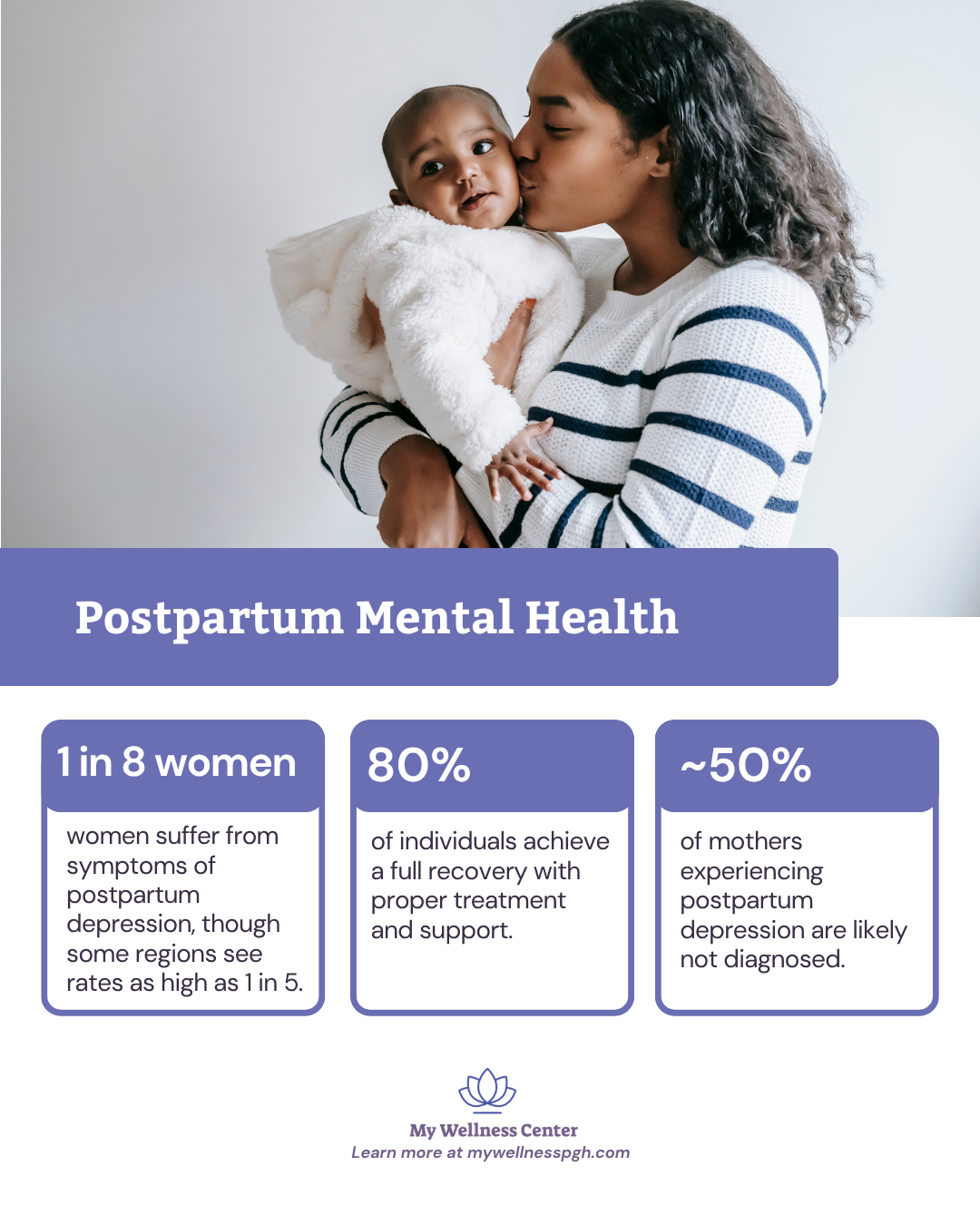
Although society doesn’t frequently discuss postpartum depression, it’s actually quite common. Some of the most important statistics to know:
- About 1 in 8 US women suffer from symptoms of postpartum depression, though some regions see rates as high as 1 in 5.
- 80% of individuals achieve a full recovery with proper treatment and support
- Likely 50% of mothers experiencing postpartum depression are not diagnosed.
Understanding Postpartum Psychosis
What Is Postpartum Psychosis?
Postpartum psychosis is often defined as a severe form of postpartum depression. And while it certainly contains elements of depression, it can also add layers of hallucinations. Symptoms of postpartum psychosis may include:
- Severe agitation and aggression, even when you’re around your newborn or other family members.
- Confusion, which may be aggravated by insomnia or insufficient restorative sleep.
- Feelings of hopelessness, especially about the future and your ability to perform as a parent.
- Delusions and hallucinations, often caused by rapid hormonal changes and interrupted sleep patterns.
- Suicidal or homicidal thoughts and behaviors. In many cases, these feelings are brought on by the delusions and hallucinations, which may say the only way the baby (or someone else) can be safe and cared for is through death.
Sadly, Lindsay Clancy isn’t the first person to experience something like her story. The Alexis Joy Foundation, which helps women overcome postpartum depression and psychosis, was created by a husband after his wife fell into such a deep depression that she committed suicide.
Stats On Postpartum Psychosis
Postpartum psychosis is much less common than postpartum depression, and it impacts about 1 in 1,000 people after delivery.
How to Manage Postpartum Issues
If you’re suffering from postpartum depression or psychosis, here are a few ways you can start to regain control of your mental health again:
1. Practice Self-Care
This one might seem difficult because it requires you to break away from being a parent to focus on your own personal needs.
This is where you should lean on your family, friends, and neighbors for support. Even taking 30 minutes on a Wednesday night so you can soak in the tub or walk through the park can boost your mental well-being and make you feel like a person again.
Follow our tips on postpartum depression self-care to learn more.
2. Find Your Community
Postpartum depression can be incredibly isolating. You might look around and assume every other parent has things figured out while you’re the only one struggling.
You’re not.
Talk openly with people you trust—whether that’s your partner, family members, close friends, other parents, or a postpartum support group. Sometimes, simply hearing someone else say, “I’ve been there too,” can make your experience feel less lonely.
Your community can also provide practical support. Let someone bring you dinner, watch the baby while you sleep, or sit with you while you have a difficult day.
3. Attend Therapy
Therapy gives you a safe place to talk about the thoughts and emotions that may feel difficult—or even frightening—to discuss with the people closest to you.
A therapist who understands postpartum mental health can help you process your birth experience, recognize patterns in your thoughts and emotions, develop healthier coping strategies, and determine when additional medical or psychiatric support may be necessary.
You also don’t need to wait until things become unbearable before reaching out. Therapy can be helpful whether you’re experiencing severe depression or simply realizing that motherhood or fatherhood feels much harder than you expected.
At My Wellness Center, we offer both perinatal counseling and postpartum counseling, offering care and support at every stage of your pregnancy and parenthood.
4. Take Your Medication As Prescribed
You should always follow your doctor or psychiatrist’s recommendations on medication. Yes, Lindsay Clancy’s notes blamed her medication for exacerbating her issues, but you should always remain in contact with your prescribing doctor about the effectiveness of your medication.
Overcoming the Stigma
For some reason, society still isn’t ready to talk openly about the challenges mothers and fathers face after giving birth.
Yes, a birth is a monumental moment, and it’s certainly something to celebrate.
But many parents struggle. Even the ones who post happy videos with their kids on Instagram.
As I’ve discussed before, I had a terrible birth experience. It nearly killed me, and I spent three weeks in the hospital without being able to bond with my daughter like after a “normal” birth.
That experience inspired me to get more involved in the perinatal field and, eventually, to start My Wellness Center.
So, even though there’s a stigma out there, the best way to overcome it is through honesty.
There’s power in telling your story.
By sharing your own story, you inspire others to do the same.
And when we share our vulnerabilities, we build community.
Book Therapy for Postpartum Depression and Postpartum Psychosis
If you need additional support, contact us.
Our compassionate team members are here to help you get back to feeling like yourself again.