

Article Summary: Can menopause cause anxiety? Yes, absolutely. The fluctuations of hormones, like estrogen and progesterone, and physical changes within your body can lead to anxiety—as well as other symptoms, like depression, insomnia, and forgetfulness.
We’ve all heard the tired clichés around “the change of life.” The age of unbearable hot flashes. The embarrassing hair loss. The dead sex drive. Most of these are exaggerated. In fact, some women even enjoy the renewed confidence that comes with menopause.
But that’s not the case for everyone.
As your hormones fluctuate, so can your mental health.
A large number of women complain of anxiety, depression, and other issues during perimenopause and menopause.
And you don’t have to accept it. Instead, you can pursue treatment methods to better manage your anxiety and achieve greater overall health.
Read our full article to learn more:
Table of Contents
Can Menopause Cause Anxiety?
Menopause And Mental Health
Treatment Options For Menopause And Anxiety
Get Started On Therapy For Anxiety
Frequently Asked Questions About Menopause, Anxiety, And Mental Health
Can Menopause Cause Anxiety?
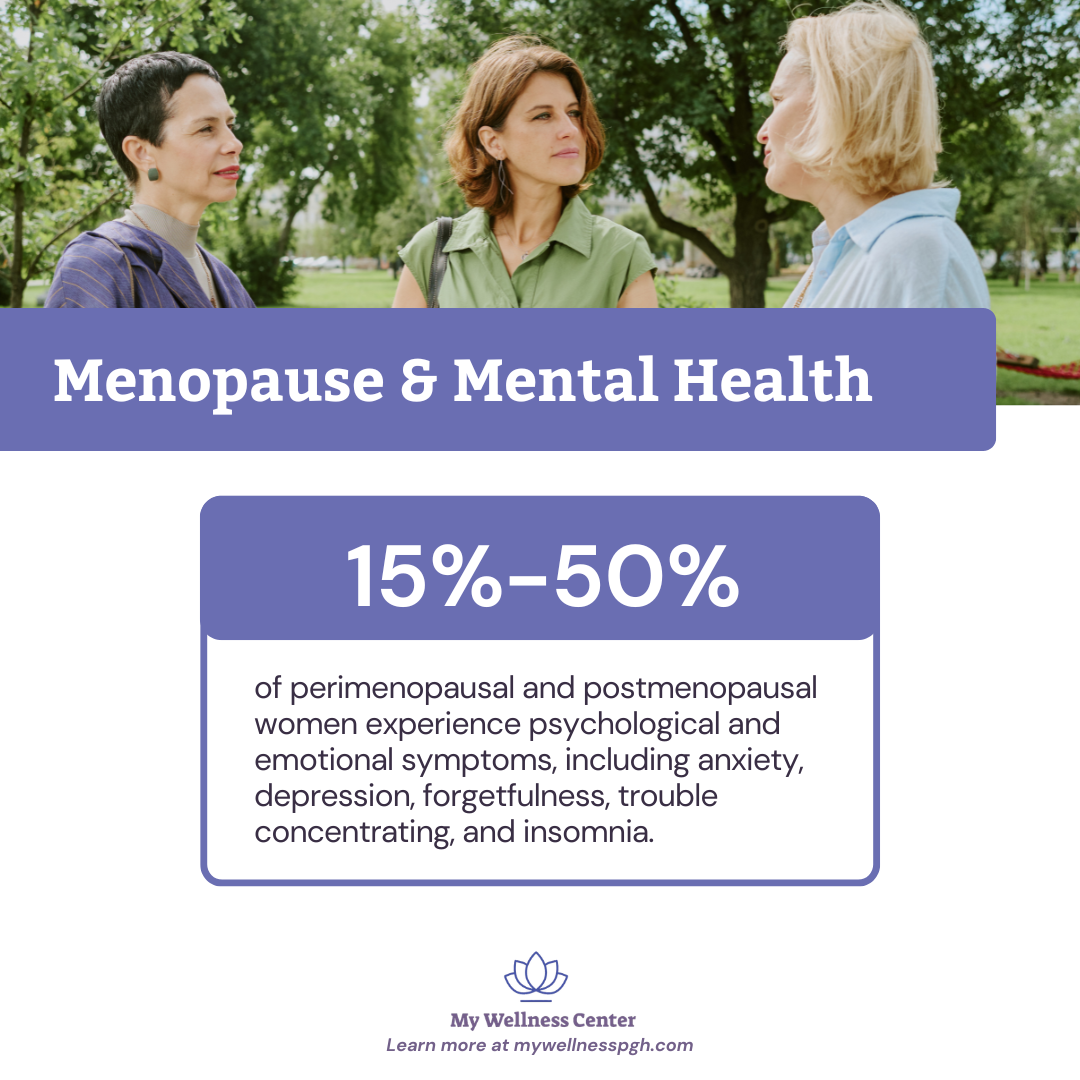
Yes, menopause can cause anxiety. In fact, 15%–50% of perimenopausal and postmenopausal women experience psychological and emotional symptoms, including anxiety, depression, and insomnia.
That’s a startling number when you consider:
- Only 9.5% of women in general suffer from mood disorders.
- Only 1.9%–5.1% of middle-aged people suffer from anxiety.
The data is clear: Menopause and perimenopause can spike anxiety and other mental health issues among women.
How Does Menopause Cause Anxiety?
During perimenopause and menopause, your body’s levels of estrogen and progesterone fluctuate. Three things happen right away—and both impact mood and overall mental health:
1. Your amygdala, which helps control emotions, responds negatively to extreme changes in estrogen levels. This can contribute to mood swings, anxiety, depression, and other symptoms.
2. Your serotonin levels plummet throughout the body without high estrogen levels. Serotonin is a “feel-good” chemical, and its absence can cause anxiety, depression, and other negative symptoms.
3. The hormone disruption can cause physical symptoms as well, including:
- Trouble sleeping
- Hot flashes
- Night sweats
- Joint aches and pains
- Bloating
- Heart palpitations
All of these can negatively impact overall mental health, causing even higher levels of anxiety and depression.
What Are the Symptoms Of Menopause Anxiety?
Menopause-induced anxiety can have a number of symptoms, both physical and psychological. Here’s what you should watch for:
- Physical Symptoms of Menopause Anxiety: Shortness of breath, rapid heartbeat, trouble sleeping, muscle tension, restlessness
- Psychological Symptoms of Menopause Anxiety: Frequent worrying, panic, difficulty concentrating, trouble remembering information, irritability
Remember: Everyone is different. Your symptoms may not match someone else’s, and anxiety may not always appear as something you immediately recognize as anxiety. We’ve seen people visit the doctor with heart and breathing issues, only to realize their symptoms stemmed from anxiety—not physical issues with their body.
Menopause And Mental Health
About four in 10 women experience mood issues during perimenopause. With that in mind, perimenopause and menopause can also lead to:
- Depression: Hormonal fluctuations during perimenopause and menopause can contribute to persistent sadness, loss of interest in activities, and feelings of hopelessness.
- Panic Disorders: Sudden changes in hormone levels can trigger intense episodes of fear or panic, often accompanied by physical symptoms like a racing heart, dizziness, or shortness of breath.
- Low Mood: Many women experience ongoing feelings of irritability, emotional heaviness, or lack of motivation as hormone levels shift.
- Brain Fog: Cognitive changes during menopause can lead to difficulty concentrating, forgetfulness, and a general sense of mental cloudiness.
Treatment Options For Menopause And Anxiety
Remember: Many of the symptoms you experience during perimenopause and menopause stem from hormone imbalances. As a result, many of the best treatment methods respond either directly to those imbalances or other symptoms.
Some of the best ways to address menopause anxiety include:
1. Healthy diet – While a balanced diet is good for all sorts of medical issues, foods that are good for estrogen, progesterone, and other hormones include:
- Olives and olive oil
- Canola oil
- Seeds
- Nuts
- Peanuts
- Avocado
You should also try to consume vitamin D-rich foods, like fatty fish, egg yolks, and vitamin D-fortified foods (like milk and yogurt).
2. Exercise – As we mentioned earlier, low estrogen levels directly contribute to low serotonin levels, and that can negatively impact mood.
Fortunately, regular exercise can boost serotonin, which can provide a quick mood boost.
And you don’t have to jump off the couch and immediately start training for a marathon. The best kind of exercise is an activity you enjoy. That could include:
- A brisk walk on your favorite trail
- Yoga in the backyard
- Dancing with your partner in the living room
- Riding your bike through the neighborhood
Even tasks like pushing the lawnmower through the yard or mopping the entire house can count as exercise!
Here’s what to keep in mind: The U.S. CDC recommends at least 150 minutes per week of moderate-intensity aerobic activity (like a brisk walk or dancing) or 75 minutes per week of vigorous aerobic activity (like running or swimming laps).
Depending on your hormone levels, you might find that exercise boosts your mood even further. Plus, you could find additional benefits like extra socialization (if you exercise with a friend), weight loss, or improved confidence—and all of those can enhance your mental wellbeing even further!
3. Medication or Hormone Therapy – Because many menopause-related symptoms stem from hormonal fluctuations, medication and hormone therapy can be effective options for managing anxiety and improving overall well-being. Two of the most common doctor-prescribed options:
- Hormone Replacement Therapy (HRT) – HRT works by supplementing declining levels of estrogen (and sometimes progesterone), which can help stabilize mood, improve sleep, and reduce the severity of symptoms like anxiety, hot flashes, and night sweats. For some women, restoring hormonal balance can significantly reduce the mental and emotional challenges that come with this stage of life.
- Antidepressants – These are commonly prescribed to help regulate mood and reduce anxiety symptoms. These medications can be especially helpful for women who may not be candidates for hormone therapy or who need additional support.
It’s important to remember that there’s no one-size-fits-all solution. The right approach depends on your medical history, symptom severity, and personal preferences. Always consult with your healthcare provider to determine the safest and most effective treatment plan for your unique situation.
4. Therapy – Through therapy, you can gain a deeper understanding of your mind, past, and triggers—as well as healthy coping strategies for turning anxiety attacks into peaceful moments.
These strategies may include:
- Grounding techniques – This may include the 5-4-3-2-1 sensory grounding technique, which prompts you to identify five things you can see, four things you can touch, three things you can hear, two things you can smell, and one thing you can taste.
- Relaxation techniques – This may include progressive muscle relaxation, which is a technique for progressively tightening and then relaxing each of your major muscle groups.
- Meditation – While there are many different types of meditation, one of the most common is mindfulness meditation, which is the practice of slowing down your thoughts and letting go of negativity by focusing on the present moment.
- Journaling – Journaling is a powerful form of meditation that allows you to express your deepest thoughts and concerns without fear of judgment.
- Breathwork – This may include square (or box) breathing, which is excellent for calming the nervous system. Square breathing follows this process: Breathe in for four seconds, hold for four seconds, breathe out for four seconds, then hold for four seconds. Repeat.
Of course, your therapist will help you develop the right skills to meet your own unique needs—while also developing a deeper understanding of yourself, your body, and your mind.
Note: If you have medical questions related to your own unique situation, please consult with your medical professional.
Get Started On Therapy For Anxiety
If you’re ready to tackle anxiety and menopause, our compassionate therapists are here to help.
Contact us to book a consultation and get started on your journey to a happier, healthier life—even during one of life’s biggest transitions.
Frequently Asked Questions About Menopause, Anxiety, And Mental Health
Can menopause cause anxiety even if I’ve never had anxiety before?
Yes. Many women experience anxiety for the first time during perimenopause or menopause due to hormonal fluctuations, even if they’ve never struggled with anxiety in the past.
How long does menopause-related anxiety last?
It varies. Anxiety symptoms may come and go throughout perimenopause and can continue into postmenopause, but for many women, symptoms improve once hormone levels stabilize.
What does menopause anxiety feel like?
Menopause-related anxiety can feel like constant worry, racing thoughts, irritability, or sudden panic, often paired with physical symptoms like a rapid heartbeat, shortness of breath, or trouble sleeping.
Can hormone therapy help with anxiety?
In some cases, yes. Hormone Replacement Therapy (HRT) may help stabilize mood by balancing estrogen levels, though it’s not the right option for everyone and should be discussed with a healthcare provider.
Are there natural ways to reduce menopause anxiety?
Yes. Regular exercise, a balanced diet, quality sleep, stress management techniques (like meditation or breathwork), and social support can all help reduce anxiety symptoms.
When should I seek help for menopause anxiety?
If anxiety is interfering with your daily life, relationships, sleep, or ability to function, it’s a good idea to speak with a therapist or healthcare provider for support and guidance.
Can therapy help with menopause-related anxiety?
Absolutely. Therapy can help you understand your symptoms, identify triggers, and develop coping strategies to manage anxiety more effectively during this stage of life.
Is menopause anxiety permanent?
No. While it can feel overwhelming, menopause-related anxiety is typically temporary and manageable with the right combination of support, lifestyle changes, and treatment.