
I was recently blown away by The Housemaid, a blockbuster thriller starring Sydney Sweeney and Amanda Seyfried. The Housemaid is a deep, terrifying look at the realities of intimate partner violence—including the complicated reasons people stay in abusive relationships.
In today’s article, we’ll explore the reasons why people stay in abusive relationships, the facts of intimate partner violence (IPV), and how therapy can provide much-needed support.
Table of Contents
What Is Intimate Partner Violence?
10 Reasons People Stay In Abusive Relationships
How Therapy Can Help
What Is Intimate Partner Violence?
The U.S. Centers for Disease Control and Prevention defines intimate partner violence as:
“…abuse or aggression that occurs in a romantic relationship. Intimate partner refers to both current and former spouses and dating partners.”
Intimate partner violence can happen through multiple types of dangerous behavior, including:
- Controlling Behavior – When a partner is controlling, they may pressure a partner to do certain things—often with the threat of repercussions, like kicking them out of the house or refusing to let them see certain friends.
- Physical Violence – As you might guess, physical violence is the act of harming or trying to hurt a partner through force.
- Sexual Violence – Sexual violence is when a partner forces or attempts to force their partner into some sort of sex act without mutual consent.
- Financial Abuse – In financial abuse, one partner controls the other partner’s money, and often uses financial pressure to coerce certain behaviors.
- Stalking – Stalking is a pattern of unwanted attention and contact—usually to the point of fear for one’s own physical safety or for the safety of a loved one.
- Psychological Aggression – As with controlling behavior, psychological aggression uses verbal and nonverbal communication to harm a partner mentally or emotionally,
Sadly, intimate partner violence is more common than most people realize. According to the National Domestic Violence Hotline:
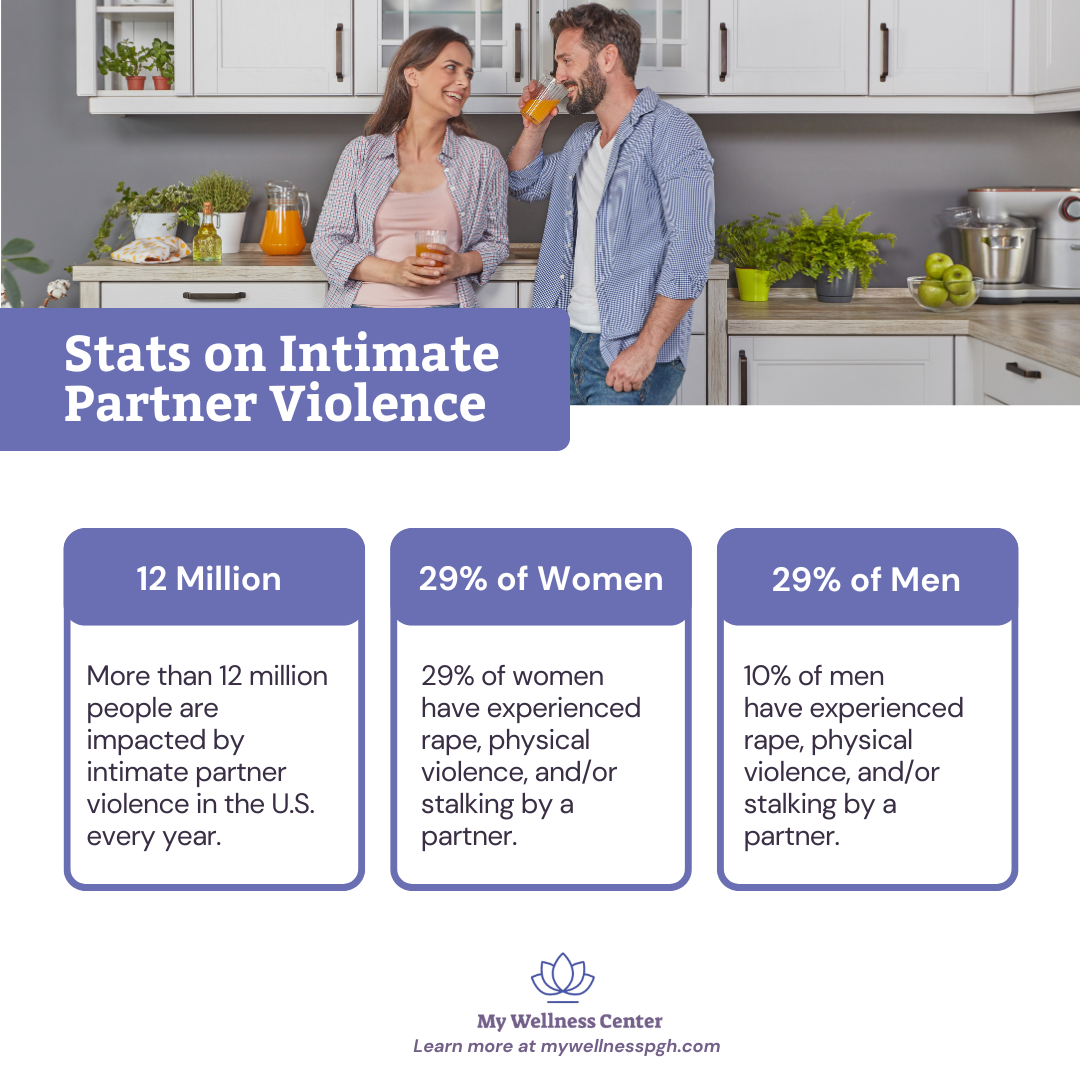
- More than 12 million people are impacted by intimate partner violence every year.
- 29% of women have experienced rape, physical violence, and/or stalking by a partner.
- 10% of men have experienced rape, physical violence, and/or stalking by a partner.
- 24.3% of women aged 18 or older have been the victim of severe physical violence by an intimate partner at some point in their lifetime.
- 13.8% of men aged 18 or older have been the victim of severe physical violence by an intimate partner at some point in their lifetime.
Even if you haven’t experienced intimate partner violence yourself, there’s a good chance you know someone who has.
Related Reading: What Is Gray Divorce?
10 Reasons People Stay In Abusive Relationships
Obviously, abusive relationships are terrible. So, why do people stay in abusive relationships? Well, it’s more complicated than you might think.
People stay in abusive relationships because:
1. Abusive Relationships Hurt the Victim’s Self-Esteem
Research shows that the constant grating of ongoing intimate partner violence directly contributes to lowered self-esteem and self-worth. Over time, victims of IPV might come to believe:
- “I deserve to be treated this way.”
- “No one else will want me, so why should I leave?”
- “This is all my fault.”
When someone is beaten down, they may lose the will to even fight back, keeping them stuck inside the relationship.
Related Reading: What Is Fawning Behavior?
2. Abuse Relationships Go Through Cycles
Abusers are experts at manipulation, and they may engage in a common cycle to maintain the relationship:
- The abuser engages in abusive behavior.
- Afterward, the abuser apologizes and acts nicely to make up for their behavior.
- The partner accepts their apology and minimizes the negative behavior.
- The relationship continues as normal until the next abusive episode.
- The cycle continues.
Although these cycles are stressful, it may feel like there are moments of genuine love in between the harsher moments—and those moments of love keep the partner locked into the relationship.
3. Victims Might Not See the Behavior As Abusive
Some victims of intimate partner violence grew up in abusive households. Growing up in that sort of toxic environment can lead to a slew of mental health issues, but it can also normalize abuse.
Because the abusive behavior is “normal,” it might not even register as something that’s truly problematic—even if it’s slowly draining their physical, mental, and emotional health.
4. It Feels Dangerous to Leave
Some victims of domestic violence are terrified of leaving because they fear the repercussions. If they announce that they’re leaving their partner, the partner could become violent or destructive, potentially leading to even greater problems.
Unfortunately, abusive behavior often grows worse over time. In fact, the National Domestic Violence Hotline explains that “oftentimes survivors find themselves experiencing something they never thought their partner would, or even could, do.”
5. Social or Religious Pressure to Stay
External pressures—including those from your social circles or religious beliefs—may prevent you from leaving harmful or dangerous relationships.
- Social Pressure – A romantic relationship isn’t just about the other person in the partnership; it’s also about the family and friends you’ve connected with along the way. Sometimes, those external relationships make leaving the romantic relationship even more difficult.
- Religious Pressure – When two people are married within certain religions, they vow to stay committed to their partner no matter what, and some people take that seriously. Even in the face of abuse, they’re reluctant to leave.
6. Embarrassment & Fear of How Others Might React
Those who feel stuck inside relationships with intimate partner violence often feel too embarrassed to tell their loved ones the truth. They might think:
- “I got myself into this situation, and I should be able to get myself out.”
- “My mom warned me about this individual, and I can’t let her be right.”
- “I’m afraid of what my friends might say if I told them the truth.”
That last one is a big deal: Revealing to others that you’re stuck in an abusive relationship often leads to pressure to get out of the relationship—and that often feels like a scary, daunting task.
7. Disillusionment
One of the most common issues we see in victims is that they don’t even realize they’re being abused.
In some cases, they come to therapy because their abuser has convinced them that something is wrong with them—that they have some sort of emotional or psychological deficiency that needs to be corrected.
When this happens, we’re quickly able to identify the truth: The victim is stuck inside a pattern of abusive behavior, and they’ve been brainwashed into thinking they’re less valuable or desirable than others.
8. They’ve Built A Life Together
Splitting up is already hard enough, but it’s even more challenging if you’re financially, socially, and emotionally tied to the abuser. A relationship might be tied together by:
- A shared mortgage
- Shared car payments
- Shared bank accounts
- Children from the relationship
- Relationships with extended family members
It’s challenging to overcome those obstacles with anyone, and it’s especially challenging when coordinating with an abuser who may not be willing to let you go peacefully.
Related Reading: Marriage Couples Counseling: What to Expect
9. Feelings of Guilt or Responsibility
Remember: Abusers are masters of manipulation and gaslighting.
As DomesticShelters.org points out, victims of intimate partner violence believe they themselves are responsible for their partner’s behavior—not the other way around.
10. They Believe They Can Fix It—Or the Relationship Might Improve On Its Own
Some victims believe that if they simply “stick it out,” their situation will gradually improve. Maybe they’ll master their own behavior to the point where their partner is always happy, or maybe their partner will simply become happier over time.
But in many cases, victims believe they have the power to stop the abuse. A recent DomesticShelters.org survey found:
- 59% said it was the abuser’s choice to continue being abusive.
- 41% said they believed if they were the cause of the abuse, they could stop it.
Think about that: Nearly half of the respondents said they could stop the abuse—even though they were regularly being abused.
Again, the power of manipulation and gaslighting in these relationships can be overwhelming, to the point that victims believe they are in control of the abuser’s behavior.
How Therapy Can Help
If you’ve been the victim of intimate partner violence, you can find support through therapy. Contact us to learn how our therapists can help you tackle issues with PTSD, self-esteem, and more—while also providing additional resources for help.