

Depression and Seasonal Affective Disorder (SAD) are commonly confused, especially when they’re diagnosed in the middle of winter.
Although depression and Seasonal Affective Disorder share symptoms (like decreased mood, anxiety, and hopelessness), their causes and duration are often incredibly different.
Read on to learn more about depression vs Seasonal Affective Disorder.
Table of Contents
What’s the Difference Between Depression and Seasonal Affective Disorder?
What Is Depression?
What Are Potential Causes of Depression?
What Is Seasonal Affective Disorder?
What Are Potential Causes of Seasonal Affective Disorder?
Treatment Options for Depression and Seasonal Affective Disorder
Find Therapy for Depression
What’s the Difference Between Depression and Seasonal Affective Disorder?
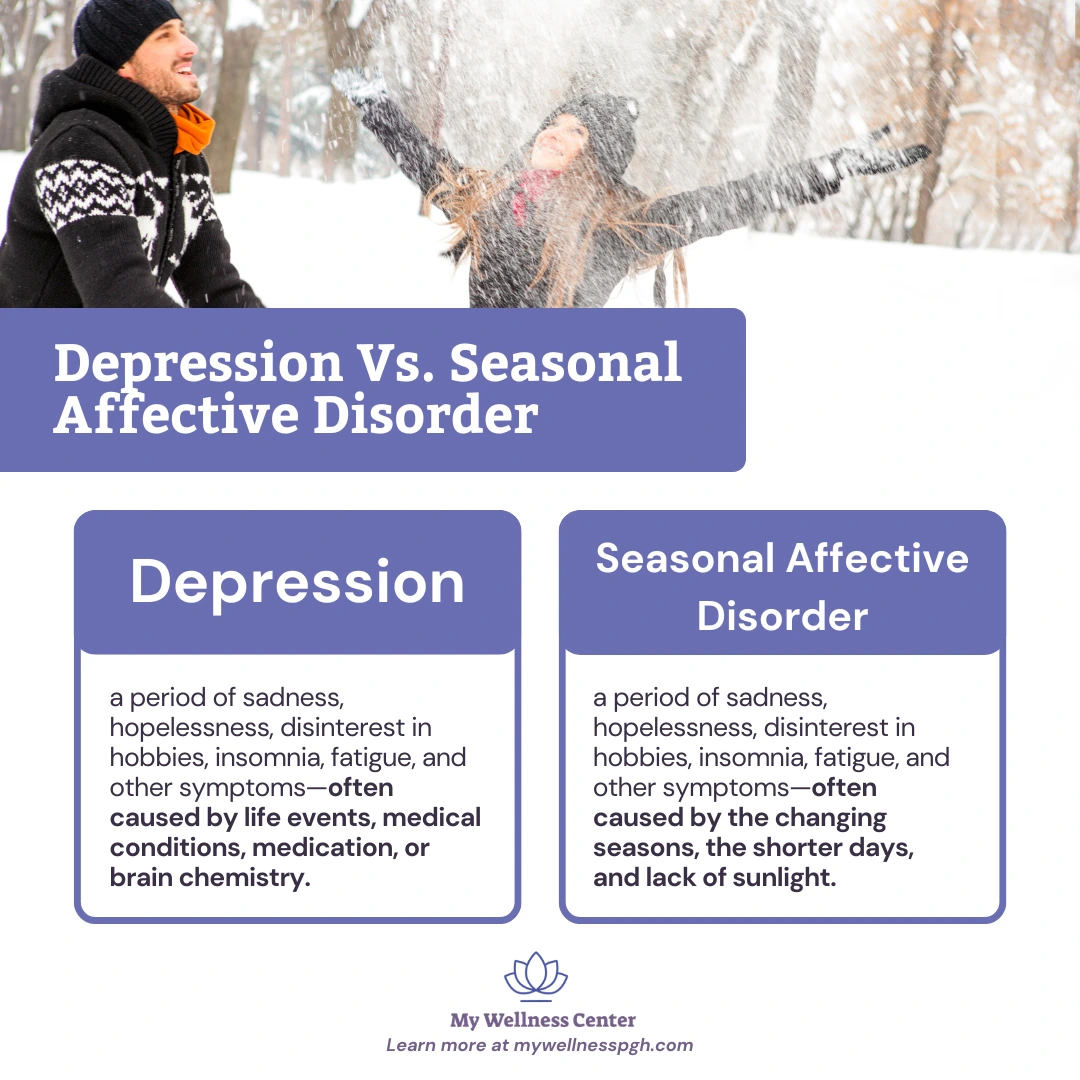
Depression is a period of sadness, hopelessness, disinterest in hobbies or activities, insomnia, fatigue, and other symptoms.
Although depression can occur at any time and last for weeks, months, or years, seasonal affective disorder is seasonal, often occurring for a few months of the year, and generally during the fall and winter months.
With that out of the way, let’s dive a little deeper into each one…
What Is Depression?
Depression is a mood disorder marked by a variety of overwhelming symptoms, including:
- Persistent sadness
- Persistent anxiousness
- Persistent hopelessness
- Feeling “empty”
- Feeling irritable or aggressive
- Drained energy levels
- Trouble concentrating or making decisions
- Social withdrawal
- Changes in appetite that often lead to weight changes
- Trouble sleeping (insomnia)
- Sleeping too much (hypersomnia)
- Thoughts of self-harm or suicide
What Are Potential Causes of Depression?
Unlike Seasonal Affective Disorder, which is caused by the shift in daylight hours, there’s no one cause of depression.
Depression is often caused by:
- Brain Chemistry and Genetics – If your family has a history of depression, you’re more likely to experience it yourself, especially if you have an imbalance of serotonin or dopamine.
- Life Events – Trauma, loss, isolation, financial stress, and other hardships can lead to depression.
- Medical Conditions – It’s well known that chronic disease can contribute to depression, but even short-lived injuries like broken bones or hospital stays can cause depressive episodes.
- Medication – Ironically, the very things designed to make us well can also interfere with mental health. For some medications, depression is a potential side effect.
What Is Seasonal Affective Disorder?
Seasonal Affective Disorder is a period of depression brought on by the changing seasons. Sometimes called “the winter blues,” Seasonal Affective Disorder generally starts in late fall/early winter and continues into the spring.
SAD can share many of the same symptoms as clinical depression, including:
- Persistent sadness
- Persistent anxiousness
- Persistent hopelessness
- Feeling “empty”
- Feeling irritable or aggressive
- Drained energy levels
- Trouble concentrating or making decisions
- Social withdrawal
- Changes in appetite that often lead to weight changes
- Trouble sleeping (insomnia)
- Sleeping too much (hypersomnia)
- Thoughts of self-harm or suicide
As we mentioned earlier, one of the biggest differences between depression and Seasonal Affective Disorder is timing. SAD may include all of the hallmarks of clinical depression, but it only lasts for certain periods of the year.
What Are Potential Causes For Seasonal Affective Disorder?
According to Johns Hopkins Medicine, there are likely two major contributors to Seasonal Affective Disorder:
- Shorter Days – Research shows sunlight is a key promoter of Vitamin D development, mood, and other health metrics. Fewer daylight hours lead to the body absorbing less sunlight—and the body and mind suffer.
- Melatonin Production – Sunlight is also critical for melatonin, an essential chemical for healthy sleep. A disruption in melatonin production could lead to restless nights, which can harm the body and mind over time.
Treatment Options for Depression and Seasonal Affective Disorder
If you’re struggling with depression or Seasonal Affective Disorder (SAD), it’s important to remember this: both are treatable. You don’t have to “push through” on your own, and you don’t have to wait for the seasons—or your circumstances—to change before getting support.
Because depression and SAD share many symptoms, their treatment approaches often overlap. However, certain strategies may be especially helpful depending on the root cause and timing of your symptoms.
1. Psychotherapy
Talk therapy is one of the most effective treatments for both depression and SAD. Cognitive Behavioral Therapy (CBT), in particular, helps individuals identify unhelpful thought patterns and replace them with healthier, more balanced perspectives.
Therapy can also help you:
- Process grief, trauma, or life transitions
- Build coping tools for stress and anxiety
- Improve sleep hygiene and daily routines
- Reduce isolation and reconnect with meaningful activities
2. Light Therapy (Especially for SAD)
Light therapy is often recommended for individuals with Seasonal Affective Disorder. This involves sitting near a specially designed light box that mimics natural sunlight, typically for 20–30 minutes each morning.
Research suggests light therapy can help regulate circadian rhythms, improve mood, and reduce fatigue during darker months. Many individuals notice improvement within a few weeks.
3. Medication
For moderate to severe depression—or when therapy alone isn’t enough—antidepressant medications may be recommended. Selective serotonin reuptake inhibitors (SSRIs) are commonly prescribed and can help stabilize mood by balancing brain chemistry.
Some individuals with recurring SAD begin medication preventatively before symptoms typically appear in late fall.
Medication decisions should always be made in collaboration with a licensed medical provider who understands your unique history.
4. Lifestyle Interventions
Small changes can make a meaningful difference in the gloomy fall and winter months. Consider:
- Spending time outdoors during daylight hours
- Maintaining a consistent sleep schedule
- Engaging in regular physical activity
- Prioritizing social connection, even when you feel withdrawn
These aren’t quick fixes, but they can support long-term recovery.
Most importantly, treatment is not one-size-fits-all. Whether your symptoms are seasonal or year-round, working with a mental health professional can help you create a plan tailored specifically to your needs—so you can move from surviving to truly feeling like yourself again.
Find Therapy for Depression And SAD
If you’re struggling with depression or SAD, contact us. Our compassionate team is here to give you the support, resources, and tools to work through your depression or Seasonal Affective Disorder.