
Couples therapy is growing more and more common throughout the US, thanks in part to its presence in pop culture. For example, Couples Therapy is an award-winning reality TV series that has given many people an inside look at what a couples therapy session is like.
But there’s a problem—a big problem. And it’s contributing to the growing list of couples therapy frequently asked questions we regularly receive.
Many mental health professionals who’ve reviewed the show have identified a long list of issues with its portrayal of real-life therapy sessions. A couple of comments from IMDb:
- “[The therapist] lacks the strength and direction needed to effectively guide the conversations during sessions… Overall, while the concept of this documentary is commendable, the execution falters due to the choice of therapist.
- “The therapist doesn’t address personal individual issues in the couples… To be fair I like her approach of not labeling people with the common dsm 5 and trying to look at people as individuals but at the same time she doesn’t look AT ALL at multiple personal factors that can influence a person’s response or the response of set behavior to their partner.”
Couples Therapy is an interesting idea, but it’s a poor representation of what real-world couples therapy sessions look like.
To learn what these sessions are really like, check out the rest of our couples therapy FAQ:
Table of Contents
Why Is Couples Therapy Important?
How Many Couples Try Marriage Counseling?
Is Marriage Counseling Effective?
Why Do People Go to Couples Therapy?
What Does A Typical Couples Therapy Session Look Like?
What Are Common Couples Therapy Exercises?
Is Couples Therapy Covered By Insurance?
Find A Pittsburgh Couples Therapist
Why Is Couples Therapy Important?
Put simply: Couples therapy is important because relationships are difficult to maintain. Research shows:
- 40%–50% of first marriages end in divorce. (Source)
- People today have higher expectations for their relationships, and they’re less likely to endure issues compared to couples in the mid-1900s. (Source)
- The most common cause of acute emotional distress in the US stems from relationship issues. (Source)
Related Reading: What Is Gray Divorce? How to Survive Divorce After 50
Our romantic relationships have a significant impact on our emotional, mental, and physical wellbeing, and couples therapy can help overcome challenges for better overall health and happiness.
Relationship Tip: Instead of asking yourself, “What do I need from my partner?” ask yourself, “What does my partner need from me?” Learn more:
How Many Couples Try Marriage Counseling?
Forty-nine percent of married couples have attended some form of couples counseling, according to a 2017 survey by MidAmerica Nazarene University.
Of those who had attended, 71% found it helpful or very helpful—indicating that marriage counseling is a powerful tool for overcoming difficult periods in the relationship.
Is Marriage Counseling Effective?
Yes, research suggests that marriage counseling is very effective. According to the American Association of Marriage and Family Therapists:
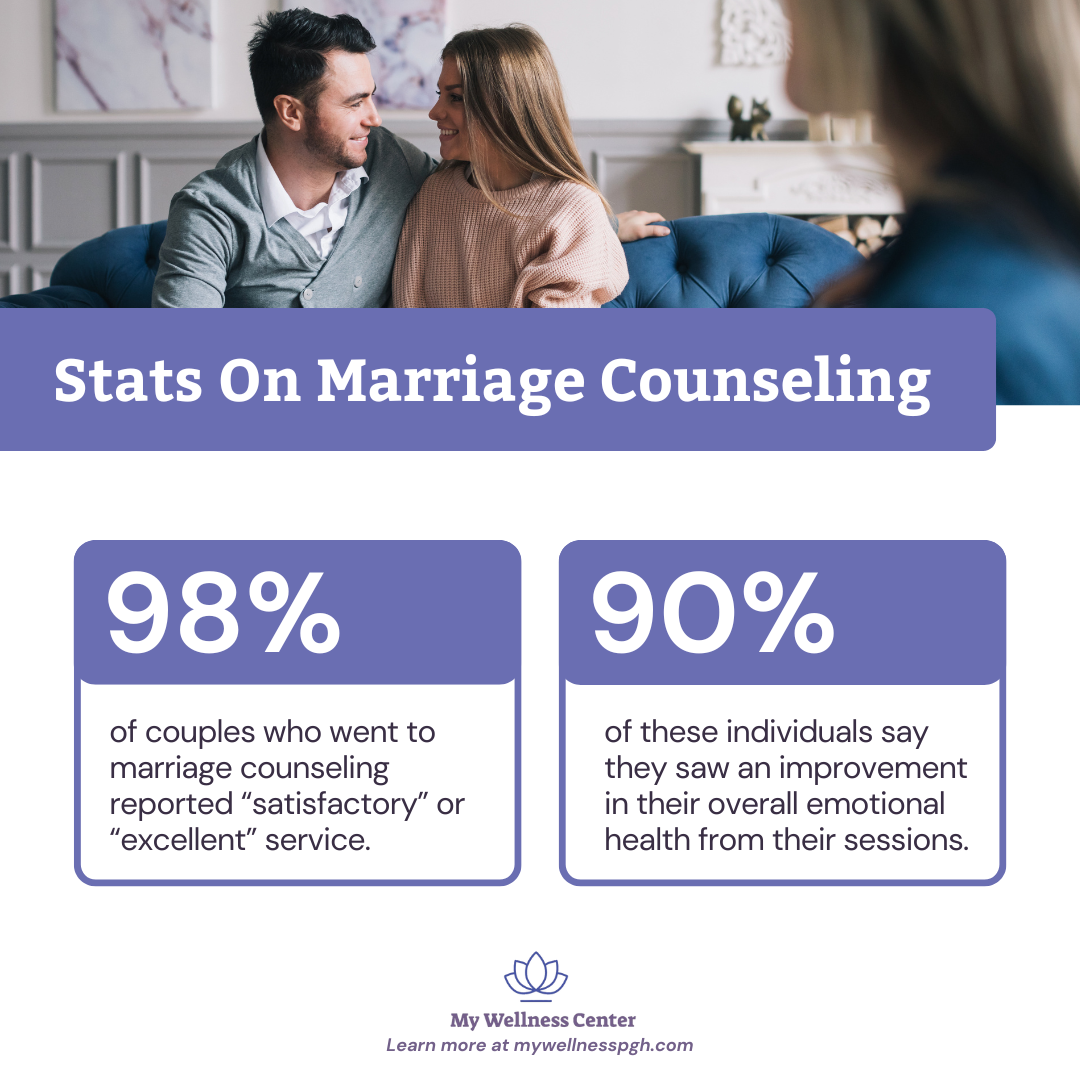
- 98% of couples who went to marriage counseling reported “satisfactory” or “excellent” service.
- 90% of these same individuals reported an improvement in their overall emotional health from attending sessions.
This is incredibly heartening: While we always recommend couples also attend individual therapy, they may receive boosts in mental and emotional health and skills from couples counseling as well.
There’s even more research that points toward marriage counseling’s effectiveness. One study’s findings: People who attend couples therapy see better results and growth in their relationship than 70%–80% of people with similar relationship issues who don’t go to therapy.
Why Do People Go to Couples Therapy?
Every couple has their own unique reasons for entering therapy, but here are the most common influences we see in our offices:
1. Communication
Healthy relationships are built on strong communication. When couples struggle to express their wants, needs, or frustrations clearly, resentment and misunderstanding can build over time.
Therapy provides a neutral space to slow down, practice active listening, and learn communication tools—like “I” statements and reflection techniques—that make hard conversations more productive and less reactive.
Therapist Kelly O’Connell even recommends clear and honest communication from the very first date:
2. Expectations In the Relationship
Many conflicts arise when partners have unspoken or misaligned expectations about daily life—like how chores are divided, how affection is shown, or how free time is spent.
Therapy helps couples identify these “invisible contracts” and renegotiate them in a way that feels fair and realistic for both parties.
This process often includes exploring family-of-origin dynamics and how cultural or gender norms (such as those shaped by patriarchy) can affect expectations in subtle ways.
Related Reading: Therapy for Involuntary Childlessness: Understanding This Painful Lifestyle
3. Parenting
Parenting changes everything—from routines to priorities to intimacy. It can also introduce new sources of stress, guilt, and fatigue.
Couples therapy can help parents find shared ground on parenting philosophies, communication styles, and household responsibilities, especially when facing unique challenges such as postpartum mood changes, blended families, or raising children with special needs.
Related Reading:
4. Trust
Trust is the foundation of any healthy relationship—and once broken, it can take time and effort to rebuild.
Therapy provides a guided environment for both partners to understand what led to the breach of trust and what actions or boundaries can help reestablish emotional safety. This process often involves learning how to be transparent, consistent, and patient with each other.
5. Infidelity
Infidelity is one of the most common—and painful—reasons couples seek therapy. Whether emotional or physical, infidelity damages trust, communication, and self-esteem.
Couples therapy helps both partners process their feelings, address underlying causes, and determine whether reconciliation is possible and what it would require to rebuild the relationship.
6. Physical Intimacy
Intimacy often fluctuates throughout a relationship due to stress, health, aging, or emotional distance.
Therapists help couples talk openly about these changes and find new ways to connect—emotionally and physically—without shame or blame. Sessions might include exercises to improve emotional closeness, build physical comfort, and reignite shared affection.
7. Finances
Research shows finances are a frequent cause of relationship stress, with some of the most common issues being:
- Unfair or uneven contributions to shared finances
- Deciding who pays for shared expenses, like the water bill or the electric bill
- Ancillary expenses, such as accessories for a truck or a splurge on hair care products
- One-sided financial decisions, like when someone makes a major purchase without consulting the other party
- Perceived irresponsibility with spending, especially when a couple isn’t aligned on where funds are best spent
Therapy can help couples share their frustrations and better understand each other’s perspectives—then lay the groundwork toward reaching common ground surrounding shared finances.
What Does A Typical Couples Therapy Session Look Like?
While a “typical” session might vary from therapist to therapist and couple to couple, here’s what they generally entail:
1. The Pre-Meeting
Some therapists advocate for a pre-meeting with each member individually before meeting with the couple together.
This pre-meeting allows the therapist to better understand the context of the relationship, the challenges each member is facing, and the goals the couple has—without either individual interfering.
2. Setting Guidelines
In the first session, the therapist will provide context and guidelines for the therapy sessions, providing a framework for productive conversation.
3. Conversation
The therapist’s biggest responsibility is to create a safe, nurturing environment that facilitates productive conversations—often by helping each person listen and understand what their partner is saying.
4. Repeat Sessions
Most couples attend therapy for 3–6 months, but the duration may depend on a number of factors:
- How receptive are both members to therapy?
- How complex are the couples’ issues?
- Are both people willing to attend individual therapy sessions as well?
- How much does insurance assist in covering the costs of therapy?
5. Individual Sessions
We generally recommend all couples who are in couples therapy to also attend individual therapy.
Individual therapy is a safe, productive space for each person to explore their own thoughts, emotions, and patterns without the pressure of their partner being present. It allows individuals to:
- Reflect on how their personal history, stress, or mental health might affect the relationship
- Build self-awareness and emotional regulation skills
- Work through trauma or unresolved issues that may be resurfacing in the relationship
- Strengthen self-esteem and communication before bringing those insights back to couples sessions
In short, individual therapy complements couples work by helping each person grow on their own—so that together, they can build a stronger, more resilient partnership.
What Are Common Couples Therapy Exercises?
Couples therapy isn’t just about talking—it’s also about practicing new ways of relating to each other. Below are some of the most common exercises therapists use to help couples improve communication, empathy, and connection.
1. The Gottman “Love Map” Exercise
Developed by Drs. John and Julie Gottman, this activity helps partners deepen their understanding of each other’s inner world.
In building a love map, each person answers questions like:
- “What’s your partner’s biggest stress right now?”
- “Who are your partner’s closest friends?”
- “What are your partner’s hopes for the next five years?”
This exercise encourages curiosity, active listening, and emotional intimacy.
2. The Speaker-Listener Technique
This exercise teaches active listening and empathy. One partner speaks while the other listens without interrupting, then paraphrases what they heard before responding.
It’s a simple but powerful way to ensure each person feels heard and understood—even during conflict.
3. The 5:1 Ratio Check-In
The Gottman Institute found that healthy relationships have about five positive interactions for every negative one.
Couples use this exercise to consciously identify and increase positive exchanges—like compliments, gratitude, humor, or small gestures of affection—to maintain a strong emotional balance.
4. Shared Meaning or “Dreams Within Conflict”
When couples argue, it’s often because deeper needs or values are clashing beneath the surface.
This exercise helps uncover the “why” behind each partner’s perspective. For example, a fight about budgeting may reveal one partner values security while the other values freedom.
Understanding these underlying motives helps couples empathize and compromise more effectively.
5. The 10-Minute Daily Check-In
This is one of the simplest and most effective habits for long-term relationship health.
Each day, partners spend 10 minutes sharing how they’re feeling, what went well, and what challenges they faced. It’s not a problem-solving session—just a daily reconnection that keeps emotional closeness alive.
Is Couples Therapy Covered By Insurance?
Most couples therapy sessions are not covered by insurance—but there are some instances where you might find support from your insurance company.
If the sessions are deemed “medically necessary” because of depression, PTSD, or another issue, this time with your therapist may be covered by your insurance policy.
Of course, another factor is your therapist: Do they accept insurance? And, if so, do they accept your insurance?
Find A Pittsburgh Couples Therapist
You don’t have to look far for a Pittsburgh couples therapist or Pittsburgh marriage counselor—we have a great team right here in Allison Park.
Contact us to set up an appointment or read the rest of our blogs to learn more about therapy and common mental health topics!