

The COVID-19 pandemic forced schools to adapt their teaching strategies to the modern world. Instead of relying on in-class instruction, schools switched to online learning—and schooling has never been the same. While students have returned to the classroom, schools still rely on occasional remote learning days, and it’s placed undue stress on parents, kids, and even teachers.
Thanks in part to the technological adaptations of COVID-19, schools have begun to rely on Flexible Instruction Days—remote learning days to help make up for what would otherwise be snow days.
Instead of calling off, students complete assignments online from the safety of their homes.
Although it sounds like a winning solution, parents and students frequently rally against them, and experts even warn that they could do more harm than good.
Today, we’ll explore the stress of Flexible Instruction Days, tips for making remote learning days more bearable, and the benefits of family therapy to make it all easier.
Table of Contents
The Stress of Online Learning For Kids And Parents
Tips for Remote Learning Days For Lower Stress Levels
Find More Support And Resources For Remote Learning Stress
FAQ About Stress & Remote Learning Days
The Stress of Online Learning For Kids And Parents
Anyone who had kids learning from home during the COVID-19 pandemic remembers the chaos of online learning. That wasn’t a fluke; research shows chronic remote learning can:
- Increase temper tantrums
- Increase anxiety
- Decrease a child’s ability to manage emotions
- Increased levels of exhaustion
- Increased headaches
A separate study even discusses “learning burnout,” which contributes to reduced learning engagement. At the same time, online learning can contribute to loneliness and stunted social development—both of which can have detrimental short- and long-term effects.
And it’s not just the kids who suffer. During the pandemic, researchers found 66% of parents provided additional instruction and resources to their kids beyond what the school delivered, often increasing anxiety, stress, depression, sleep disturbances, and disinterest in hobbies.
Online learning and remote school days disrupt everyone, especially since parents have to content with:
- Shifts in child care
- Shifts in eating schedules
- Shifts in transportation
- Shifts in the adult’s own workday and schedule, with the potential need to call off work and even miss a day of pay, leading to increased financial stress
All of this is on top of an already stressful lifestyle. A third (33%) of parents reported high levels of stress in the last month, compared to only 20% of non-parent adults. That means parents are more than 50% more likely to experience high levels of stress on a regular basis!
So, how can parents make remote learning days less stressful? Well…
Tips For Remote Learning Days For Lower Stress Levels
Here are a few research-backed strategies on how to manage the stress of remote learning days:
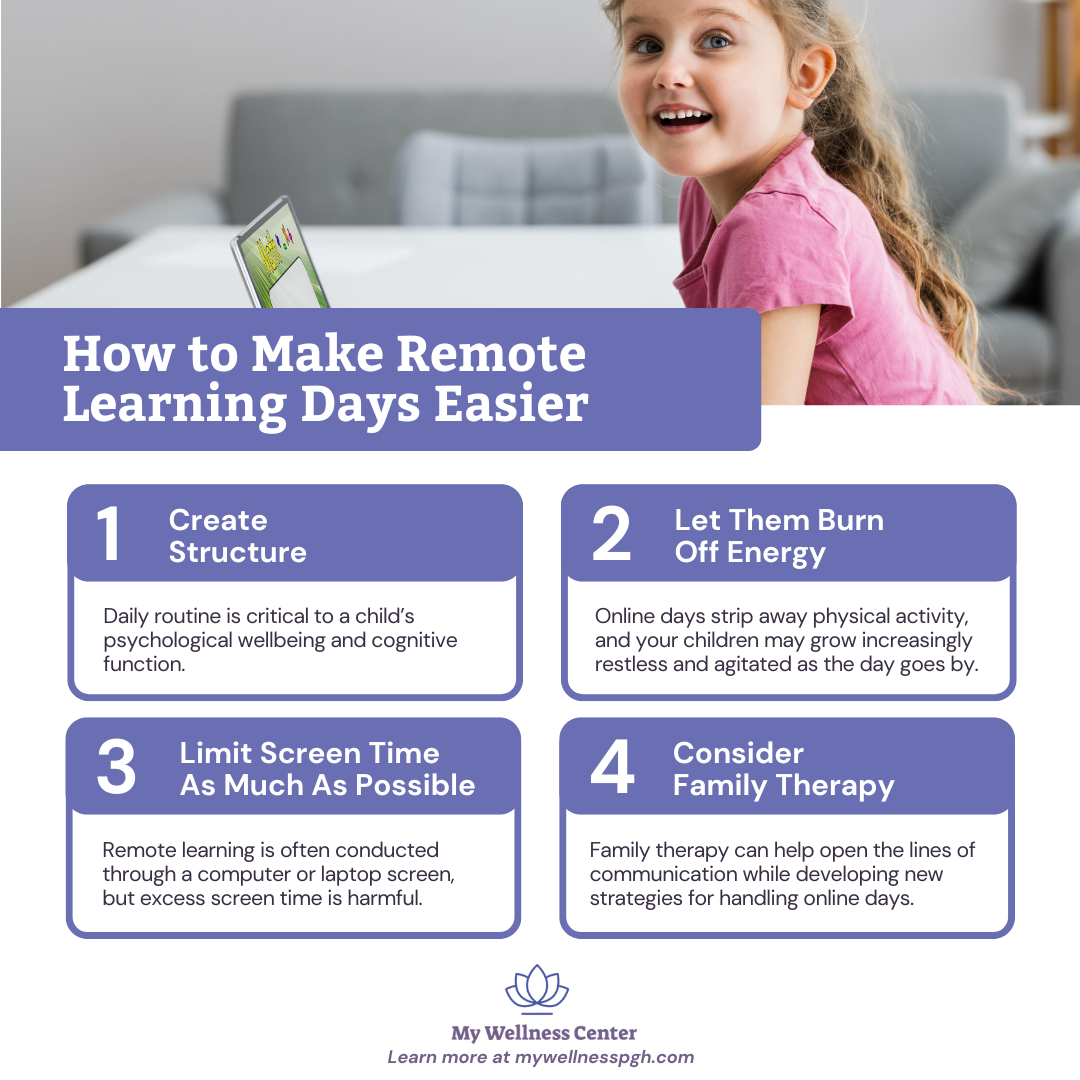
1. Create Structure
One of the great benefits of school is the structure it provides. Research shows daily routine is critical to psychological well-being, cognitive function, and more. But when a child studies from home, the structure and routine of school disappear—unless you help them create a new structure for the day.
A few ways you can help your kids:
- If they don’t have their own desk, help them make their own study space at home.
- Make sure they wake up at their regular time.
- Encourage them to follow the same morning routine (including breakfast, changing clothes, and brushing their teeth).
- Have them stop for lunch at the same time they break at school.
- Encourage them to take a “recess” to burn off extra energy.
2. Give Them An Opportunity to Burn Off Energy
A normal school day offers multiple ways to blow off steam: chatting with friends, walking between classes, and running around at recess. All of these are important for normal childhood development.
In fact, the U.S. Centers For Disease Control And Prevention recommends:
- Children 3–5 should be physically active throughout the day.
- Children 6–17 should have at least 60 minutes of moderate-to-vigorous intensity physical activity every day.
Unfortunately, remote learning days strip away many opportunities for physical activity, and your children may grow increasingly restless and agitated as the day goes by.
We’ve already discussed encouraging your kids to take a “recess,” but you could also:
- Ask them to walk the dog.
- Take a walk with them around the block.
- Go for a family jog or bike ride.
- Give them time to play outside in between school assignments.
3. Limit Screen Time As Much As Possible
This one is tricky. Remote learning is often conducted through a computer or laptop screen, so your kids likely have to spend time with digital screens.
But excess screen time is damaging physically and psychologically, as it can:
- Contribute to weight gain
- Lead to tech addiction
- Increase nearsightedness
- Increase levels of depression and anxiety
- Disrupt social development
Learning how to limit screen time outside of scheduled classroom time can make your child happier and healthier throughout the day.
4. Consider Family Therapy
If you need even more ideas, family therapy is a powerful opportunity for family members to connect in a safe, non-confrontational environment.
Family therapy can help open the lines of communication while collectively developing new strategies for handling remote learning days—in a way that feels comfortable and supportive for everyone involved.
Find More Support And Resources For Remote Learning Stress
If you’re ready to call in professional support and guidance, contact us. Our team of therapists can help you navigate the stress and anxiety of parenthood while developing new skills and perspectives to help you be more engaged while also enhancing your own personal health.
FAQ About Stress & Remote Learning Days
Here are some of the most common questions we hear about how to manage the stress of remote learning days and why these days are so difficult for kids and parents:
1. What are remote learning days so stressful?
Remote learning days disrupt normal routines for both kids and parents. Structure disappears, schedules shift, and parents often have to adjust work, childcare, and household responsibilities all at once. Without the built-in rhythm of a school day, children may struggle emotionally and behaviorally, while parents juggle added instructional support, financial stress, and competing demands—creating a perfect storm of overwhelm for the entire household.
2. How do remote learning days negatively impact children?
Research shows chronic remote learning can increase anxiety, temper tantrums, emotional dysregulation, and even learning burnout. It may also contribute to loneliness and stunted social development. With fewer opportunities for movement and peer interaction, kids can become restless and disengaged. Excess screen time tied to remote instruction may also impact sleep, mood, and overall mental health.
3. How do remote learning days impact parents?
Parents often experience increased stress due to sudden schedule changes, childcare gaps, and work disruptions. Some may need to miss work, risking lost income. During the pandemic, many parents provided additional instruction at home, which increased anxiety, depression, and sleep disturbances. Since parents already report higher stress levels than non-parents, remote learning days can amplify emotional and financial pressure.
4. How can parents make remote learning days less stressful?
Creating structure is key. Help your child follow a consistent routine, set up a dedicated study space, and maintain regular meal and sleep schedules. Encourage physical activity to reduce restlessness and limit non-school screen time. Most importantly, keep communication open. If stress feels overwhelming, family therapy can provide tools and support to help everyone navigate remote learning days more smoothly.